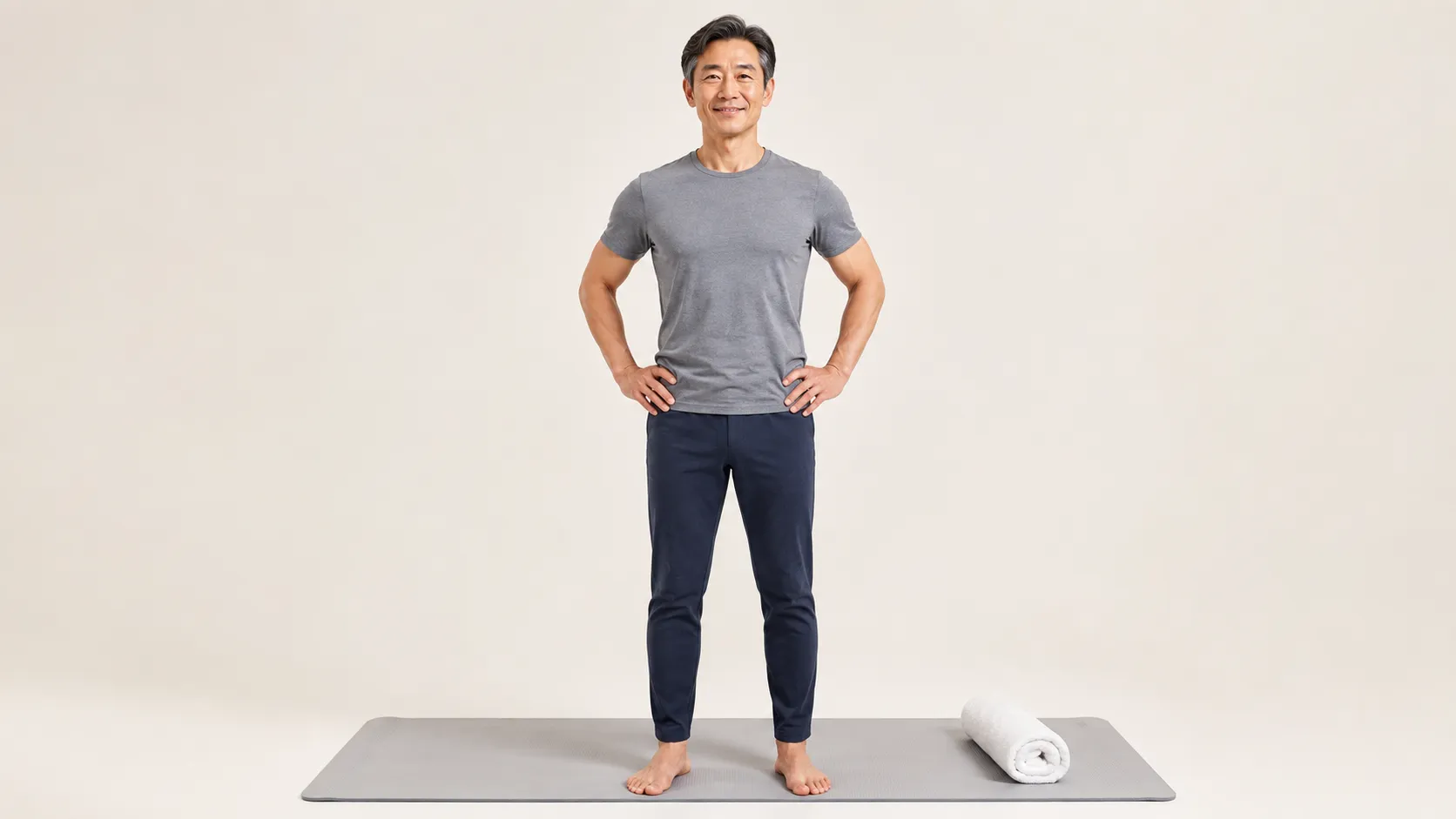
Ask the internet what the Japanese towel method does for you and you will be told it melts belly fat, shrinks your waist by inches, and realigns your entire skeleton in five minutes. Ask someone who has actually done it every day for a month and you will hear something different, and rather more useful. They will tell you their chest feels less tight, their lower back is happier after a long day of sitting, and they seem to catch themselves slouching less often.
That second list is the real one, and it is worth understanding properly. The towel method is not dramatic. It is a passive stretch, which means you lie down over a rolled towel and let gravity and time do the work while you do very nearly nothing. What makes it worth your attention after fifty is not the size of any single benefit, but how gentle the whole thing is compared with what it gives back.
This article goes through each benefit in turn, explains why the position produces it, and is equally clear about what the method cannot do. If you want the step by step instructions instead, our complete guide to the Fukutsuji method covers the technique in full.
The benefits at a glance
Opens the chest and eases rounded shoulders, the benefit most people notice first.
Releases everyday lower back tension built up from hours of sitting.
Makes a full breath feel easier by giving the ribcage and diaphragm more room.
Asks almost nothing of you physically, which makes it possible on stiff days and low energy days.
Gives you a calm daily pause, five minutes of slow breathing that settles the nervous system.
Builds body awareness, so you notice your own slouch and correct it during the day.
A quick reminder of what the method is
The method comes from Dr. Toshiki Fukutsuji, a Japanese bodywork practitioner who spent years working with clients troubled by back pain and poor posture. His idea was simple enough to explain in a sentence. Roll a bath towel into a firm cylinder, lie back over it on a flat surface, rest there for a few minutes, then get up slowly. The book he wrote about it sold in the millions across Japan and the rest of Asia.
Where you place the roll decides which benefit you emphasise. Under the lower back, at roughly the level of your navel, it works on lumbar tension and the front of the hips. Higher up, between the shoulder blades, it works on the chest and the rounding of the upper back. Neither placement is better than the other. They simply answer different complaints, and many people alternate between them through the week.
The important thing to hold on to as you read the benefits below is that this is a passive practice. You are not stretching yourself. You are arranging your body over a support and then getting out of the way while it slowly lets go. That is why it can be repeated daily without leaving you sore, and it is also why the changes arrive gradually rather than all at once.
Benefit one: an open chest and less rounded shoulders
This is the benefit people notice first, often on the very first attempt, and it is the one the method is genuinely best at.
Decades of reaching forward for steering wheels, kitchen counters, books and phones gradually shorten the pectoral muscles across the front of the chest. Tight pectorals pull the shoulders inward like a drawstring. At the same time the muscles between the shoulder blades, whose job is to hold the shoulders back, weaken from lack of use. The front wins that tug of war, and the upper back settles into a soft forward curve.
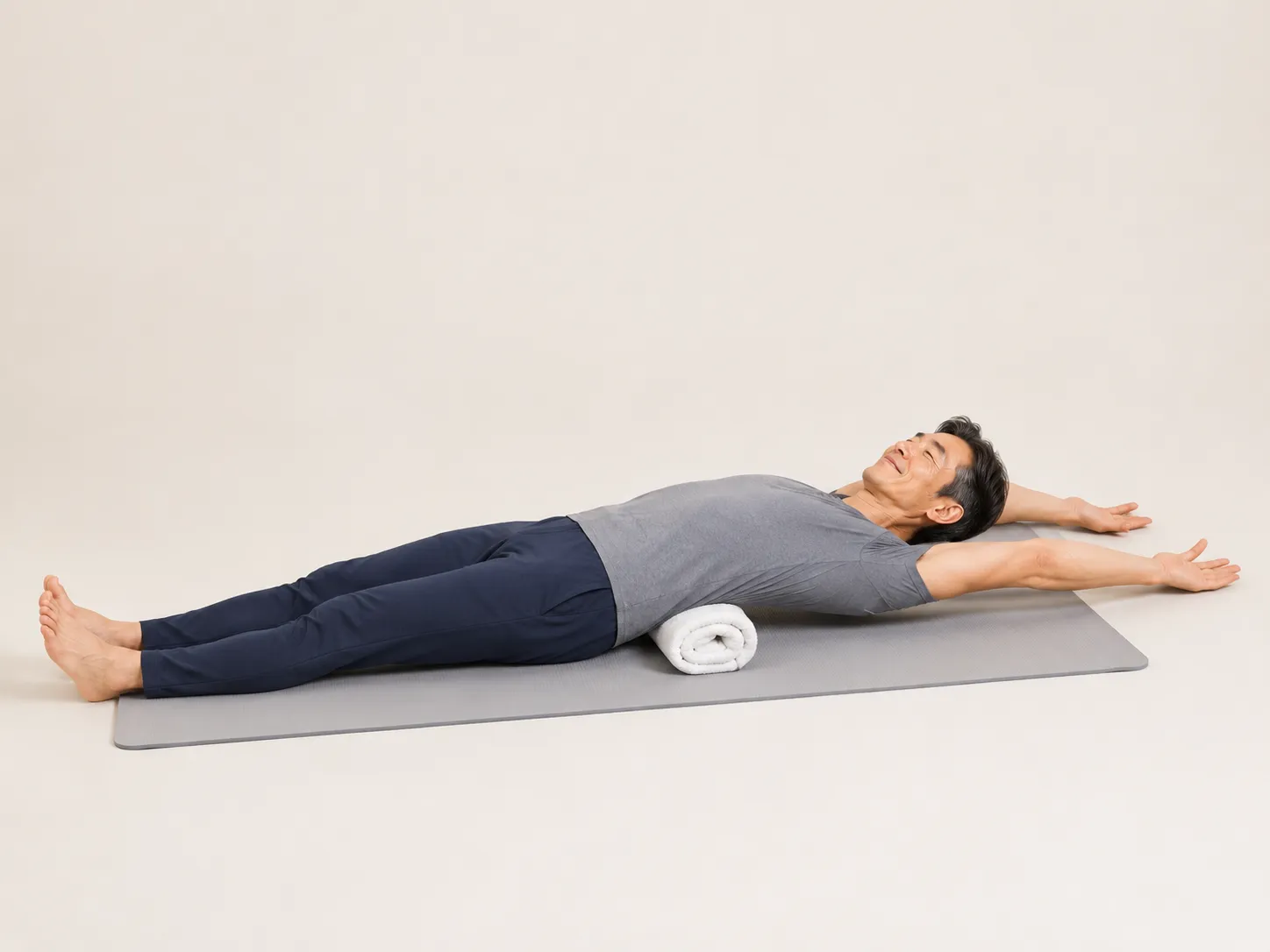
Lying back over a towel roll reverses the geometry for a few minutes. The roll acts as a gentle fulcrum beneath the spine, the ribcage is invited to open across the top of it, and the arms resting out to the sides let the tight chest muscles lengthen slowly under nothing more than the weight of your own arms. There is no force involved, which matters, because forcing a tight chest tends to make it guard rather than release.
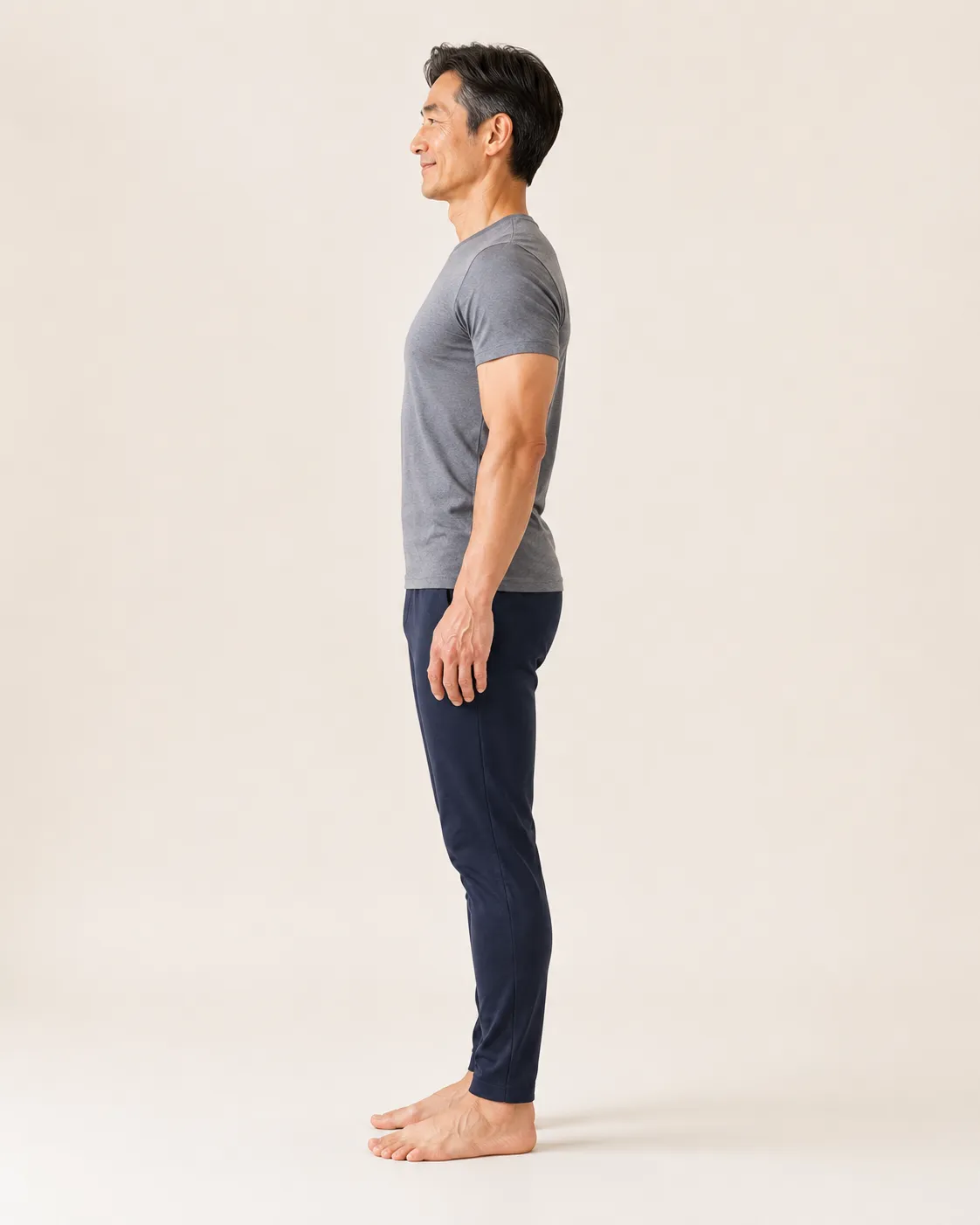
The honest framing is this. A few minutes over a towel will not permanently rebuild your posture, because posture is a habit held by muscles that are busy all day long. What it does is restore range to the tissues that have shortened, so that standing tall stops feeling like an effort you have to remember and starts feeling like somewhere your body is happy to be. Pair it with a little upper back strengthening and the effect holds far better. Our guide to the towel exercise for posture covers the upper back placement in detail.
Benefit two: relief for an everyday tired lower back
Most lower back discomfort after fifty is not caused by anything dramatic. It is the accumulated stiffness of sitting, and it responds well to being gently undone.
When you sit, the hip flexors at the front of your hips are held short for hours at a time. Over years they adapt to that shortened length and begin to tug on the pelvis, which tips it forward and increases the arch in the lower back. The muscles running alongside the lumbar spine then work overtime to hold you up. The result is that dull, tight, end of day ache that so many people describe as simply part of getting older.
Lying with the roll beneath the lower back does two useful things at once. It supports the lumbar curve so those overworked muscles can finally stop bracing, and with the legs extended it gently lengthens the front of the hips in the opposite direction to sitting. Five minutes will not undo eight hours in a chair, but done daily it stops the stiffness compounding, which is the more important victory.
Do note the difference between everyday tension and genuine back pain. The first responds nicely to gentle daily care. The second, especially pain that travels down a leg, wakes you at night, or follows an injury, needs a proper assessment rather than a towel. Our towel stretch for back pain guide walks through the lumbar placement and when to leave it alone.
Benefit three: a fuller, easier breath
This benefit surprises people, because it is rarely what they came for. Then they take a breath in the position and notice it goes deeper than usual without any effort.
There is a straightforward mechanical reason. A chest that has curled forward gives the ribs less room to swing and the diaphragm less room to descend. Breathing then becomes shallower and moves up into the neck and shoulders, which is tiring in a way most people never connect to their posture. Opening the front of the chest over the towel does the reverse. The ribcage broadens, the diaphragm has somewhere to go, and a slow breath simply fits more comfortably.
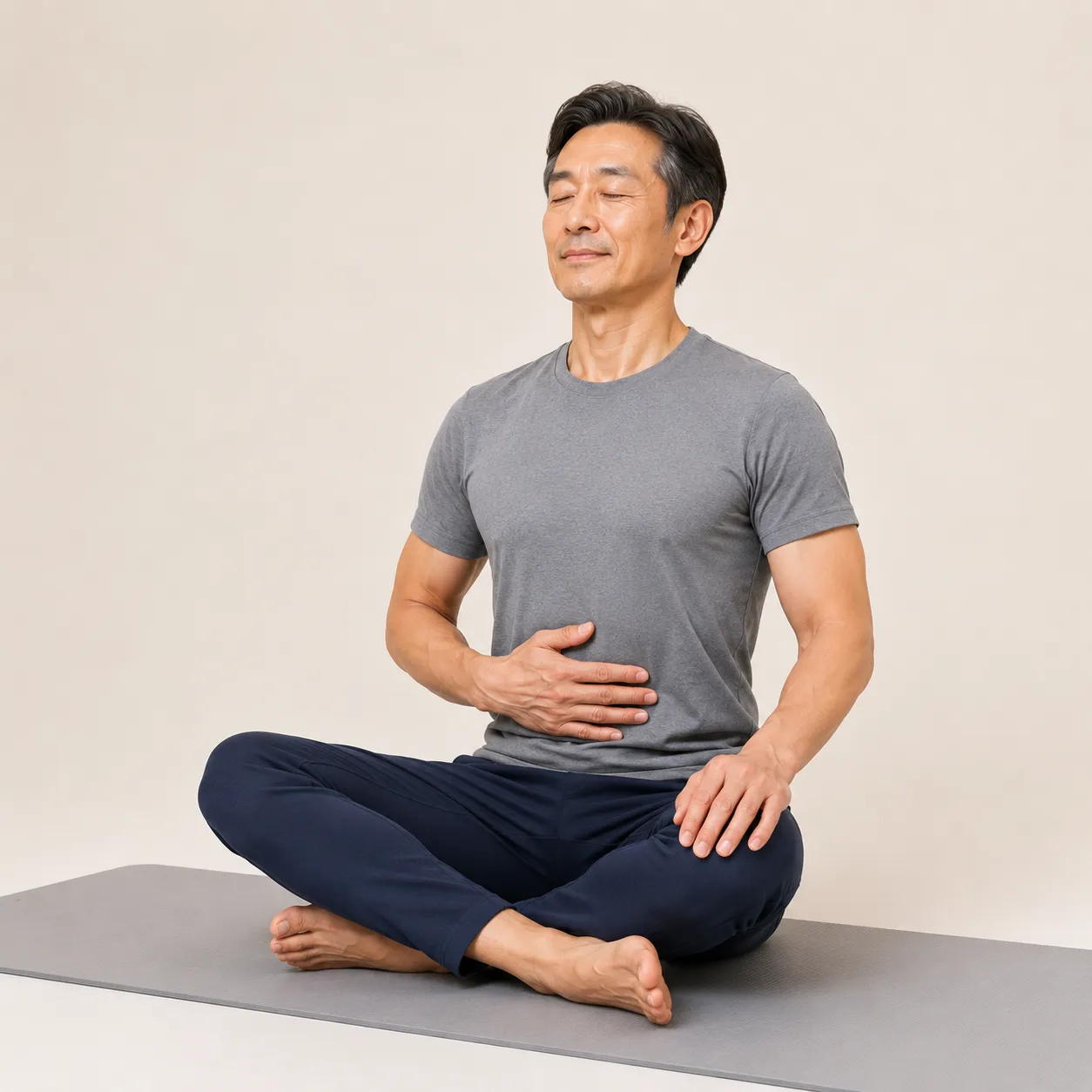
Breathing slowly through the nose while you lie there is not a decorative detail. Long, unhurried exhales nudge the nervous system toward its rest and digest setting, which is where muscles release most willingly. Breathing and stretching reinforce one another here, and it is a large part of why people describe the five minutes as calming rather than merely useful. If you enjoy that side of it, the hara belly breathing practice is a natural companion.
Benefit four: it asks almost nothing of you
This one rarely makes the lists, and for anyone over fifty it may be the most valuable of the lot. The exercise you actually do beats the better exercise you skip.
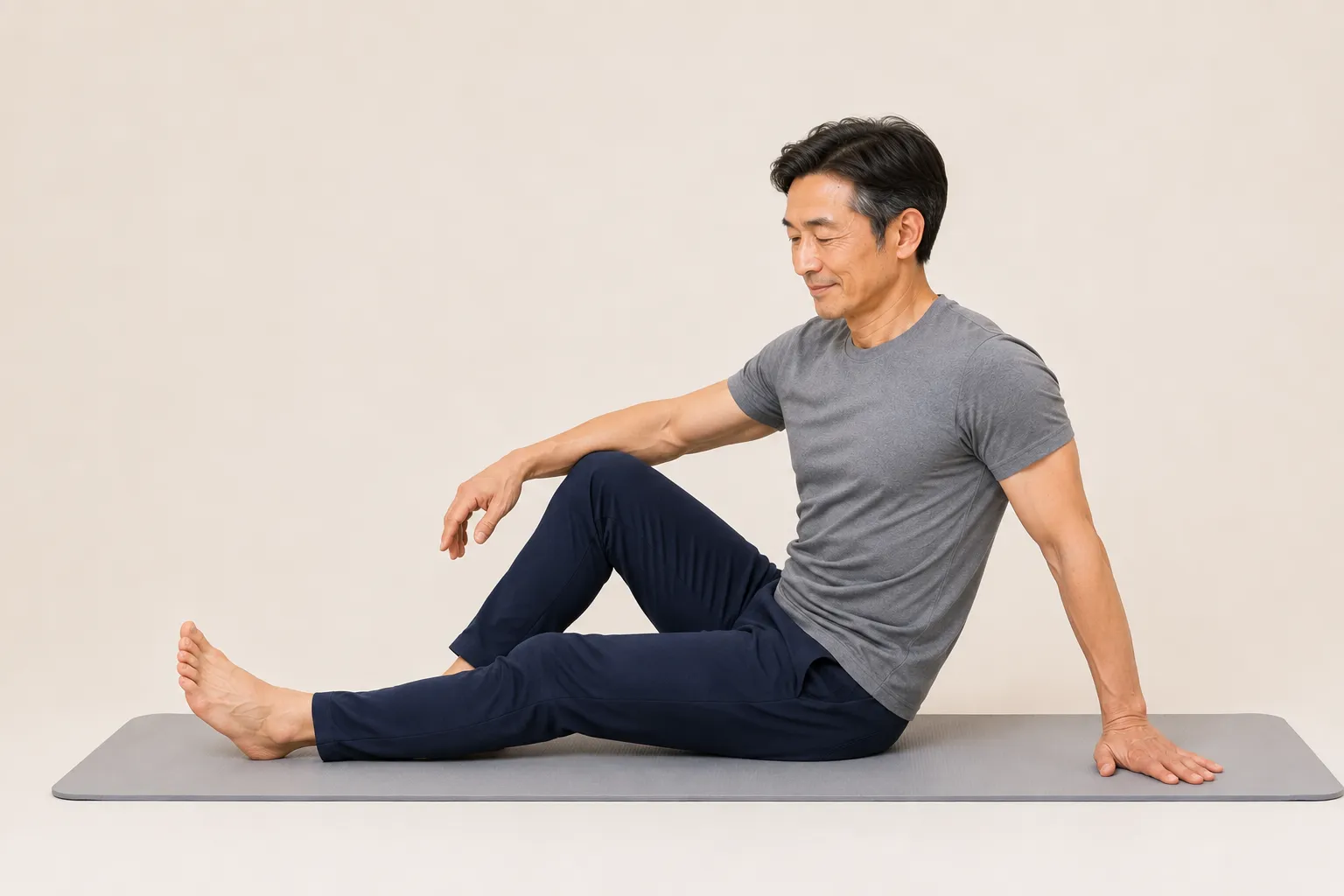
There is no equipment to buy, no class to attend, no sequence to memorise, and no fitness level to reach first. You need a towel you already own and a firm patch of floor. Because the stretch is passive, it does not leave you sore, so there is no reason to skip tomorrow. And because you control the thickness of the roll, you control the intensity precisely. A thin hand towel on a stiff morning and a thicker bath towel on a good one are both legitimate versions of the practice.
That adjustability matters more with age, when good days and stiff days differ more than they used to. A practice you can scale down instead of abandoning is a practice you will still be doing in a year. This fits the old Japanese idea of yōjō, caring for the body through small steady habits rather than occasional heroic efforts.
Benefit five: five quiet minutes in the day
Lying still on the floor with your eyes closed and your chest open, doing nothing but breathing, is a small act of rest that most days do not otherwise contain.
Many people find the evening session becomes the one they protect most. It marks the end of the working part of the day, it unwinds the shape that sitting pressed you into, and the slow breathing leaves you calmer than when you lay down. A number of readers tell us they sleep more easily on the days they do it, which is exactly what you would expect from a few minutes of unhurried breathing before bed, even if the towel itself deserves only part of the credit.
There is a sixth benefit tucked inside this one. Spending five minutes a day paying attention to how your chest and back feel makes you far more likely to notice, at three in the afternoon, that you have collapsed into your chair again. That noticing is worth as much as the stretch itself, because it is what carries the benefit into the other twenty three hours.
What the towel method cannot do
A benefits article that only lists benefits is not much use to you. Here is the other side, plainly.
It will not slim your waist or burn belly fat. This is the claim that made the method famous online and it is the least defensible one. You cannot lose fat from a chosen spot by stretching it, and lying still burns almost no energy. If a tape measure does read slightly smaller afterwards, the likeliest explanation is that you are standing taller and your ribcage is sitting differently, not that fat has left the building.
It will not permanently realign your pelvis or spine. Bones sit where the muscles, ligaments and daily habits around them put them. A passive stretch can restore length to tight tissue, which genuinely changes how you carry yourself, but the word realignment oversells what five minutes on a towel achieves.
It will not make you stronger. This is the limitation worth taking most seriously. Stretching a tight chest opens the door, but it takes strength in the upper back to keep the shoulders where the stretch put them. The towel work pairs best with gentle strengthening and regular walking. On its own it is half of a good plan.
It is not a treatment for a medical problem. Persistent pain, pain that travels down a limb, numbness, or any rounding of the spine caused by changes in the bones themselves belong with a doctor or physiotherapist. The towel can often sit alongside that care as a daily habit, with their agreement, but it does not replace it.
None of that diminishes the method. It simply puts it in its proper place: excellent, gentle, daily maintenance for the parts of ageing that respond to gentle daily maintenance. If you would like to see how it compares with a more active practice, our Fukutsuji method versus yoga comparison is an honest look at both.
How soon you will notice each benefit
Expectations shape whether people stay with a practice, so here is a realistic timeline drawn from how these tissues actually behave.
- • The first session. A pleasant stretch across the chest, and often a noticeably easier breath while you are lying there. Standing up, many people feel taller for a while.
- • The first week. The position stops feeling awkward and starts feeling welcome. Any initial tenderness in the mid back settles as the tissue adapts.
- • Two to four weeks. The chest holds its openness for longer after you get up. Everyday lower back tension is less insistent by evening. You begin catching your own slouch.
- • Six to twelve weeks. The change others might notice, in how you stand and hold your shoulders, and only if the habit has been genuinely daily rather than occasional.
If a month of daily practice produces nothing at all, that is worth paying attention to rather than pushing through. It usually means the roll is the wrong thickness or in the wrong place, and occasionally it means the problem is not a muscular one.
Who benefits most, and who should take care
The people who tend to get the most from this are those whose stiffness comes from sitting and years of forward reaching: desk workers and former desk workers, drivers, readers, gardeners, and anyone who has noticed their shoulders creeping forward. It suits people who want something gentle, and people who have tried more demanding routines and quietly stopped.
Speak with your doctor first if you have
- • Osteoporosis or low bone density
- • A recent or healing fracture
- • Spinal stenosis or significant scoliosis
- • Recent surgery on your spine, hips, or shoulders
- • Persistent back pain that has not been assessed
Lying over a firm roll places gentle pressure along the spine. For some conditions that pressure needs medical clearance and a softer setup. When in doubt, ask.
Whatever your starting point, begin with a thinner roll than you think you need and one or two minutes rather than five. Sharp pain, pins and needles, numbness or dizziness mean stop, not persevere. And always come up by rolling onto your side first and pushing up with your hands, never by sitting straight up. That single habit protects your back and prevents the lightheaded moment that catches people out.
Getting the most from your five minutes
Small details separate a practice that quietly works from one that quietly fades.
- • Attach it to something you already do. After the morning tea, before the evening news. Habits stick to other habits far better than to good intentions.
- • Use a firm surface. A carpeted floor or a mat. A bed is too soft to give the support the position depends on.
- • Let the breath lead. Slow nasal breathing with long exhales, and let the shoulders soften toward the floor each time you breathe out.
- • Alternate the placements. Upper back for the chest and shoulders, lower back for lumbar tension. Many people do one in the morning and the other at night.
- • Add a little strength. Gentle shoulder blade squeezes or light rows on other days keep the openness you have gained.
- • Keep it short and daily. Five minutes every day beats twenty minutes on a Sunday, every time.
Frequently asked questions
What is the single biggest benefit of the Japanese towel method?
Opening the chest and easing rounded shoulders. It is the benefit that arrives fastest, the one most people can feel from the first session, and the one the position is mechanically best designed to produce. Everything else, including the easier breathing, follows from that same opening.
Does the towel method really slim your waist?
No. Spot reduction of fat is not something stretching can do, and lying still burns very little energy. Any smaller measurement afterwards reflects better posture and a ribcage that is sitting differently, which is a real change but not the same as losing fat.
How long should I lie on the towel to get the benefits?
Around five minutes is the usual target, built up to gradually from one or two minutes in the first week. Longer is not better. The tissue releases in the first few minutes, and staying much longer tends to leave the mid back tender rather than more open.
Can I do it every day?
Yes, and daily practice is where the benefits come from. Because the stretch is passive and brief, it does not need recovery days the way strength work does. Once or twice a day is plenty, and a third short session after long sitting is fine if you enjoy it.
Does it help with back pain?
It helps the everyday stiffness and tension that builds up from sitting, which is what most people mean by a sore back. It is not a treatment for persistent pain, pain travelling down a leg, numbness, or pain following an injury. Those need a proper assessment first.
Is it enough on its own?
As posture and mobility maintenance it is a fine foundation, but it does not build strength. Pair it with regular walking and a little gentle upper back strengthening and the results both improve and last longer.
Which placement should I choose for the benefits I want?
Put the roll under the upper back, between the shoulder blades, for chest opening, rounded shoulders and easier breathing. Put it under the lower back, at navel level, for lumbar tension and tight hip flexors. If you want both, alternate them across the day or the week.
Modest benefits, faithfully delivered
The Japanese towel method will not transform your body, and anyone promising that is selling something. What it will do, if you give it five minutes most days, is keep your chest open, your lower back easier, your breath fuller and your attention on how you carry yourself. Those are not small things to hold on to after fifty, and almost nothing else asks so little in return.
Roll up a towel, find a firm patch of floor, and let five quiet minutes start doing their work today.
Medical Disclaimer
This article is for general educational purposes and is not medical advice. Always speak with a qualified healthcare professional before starting any new exercise, especially if you have an existing health condition.
Put the benefits into practice
The Fukutsuji Method (Complete Guide)
The full method: history, technique, and how to do it safely
Towel Exercise for Posture
The upper back placement for chest opening and rounded shoulders
Towel Stretch for Back Pain
The lower back placement for everyday lumbar tension
Hara Belly Breathing
Deepen the calm and the fuller breath the towel work opens up