What if you could address multiple health concerns (stiff joints, low energy, poor circulation, and chronic tension) with just four simple stretches that take less than 10 minutes? This is the promise of Makko-Ho, a Japanese stretching system that has been helping people maintain flexibility and vitality for over 60 years.
Makko-Ho (pronounced "mah-koh-hoh") combines the wisdom of Traditional Chinese Medicine with practical stretching exercises designed to stimulate the body's meridian system, invisible pathways through which energy (or "qi") flows. While the concept of meridians may sound mystical, the physical benefits of these stretches are very real: improved flexibility, reduced pain, better posture, and increased energy levels.
What makes Makko-Ho particularly suitable for people over 50 is its gentle, accessible nature. Unlike yoga practices that may require significant flexibility or strength, Makko-Ho's four poses can be modified for any fitness level. You don't need to touch your toes or fold yourself into pretzel shapes to experience the benefits.
What Is Makko-Ho? Understanding Meridian Stretching
Makko-Ho was developed in the 1960s by Wataru Nagai, a Japanese man who at age 42 found himself suffering from numerous health problems including stiffness, poor circulation, and chronic fatigue. After experimenting with various stretching techniques based on Traditional Chinese Medicine principles, he created a simple system of four stretches that dramatically improved his health.
Nagai lived to be 102 years old, practicing these stretches daily, and attributed his longevity and vitality to this routine. His method spread throughout Japan and eventually around the world as people discovered the profound effects of these deceptively simple exercises.
The Meridian System Explained
In Traditional Chinese Medicine, meridians are channels through which life energy (qi or chi) flows throughout the body. There are 12 primary meridians, each associated with specific organs and body functions. When these meridians become blocked or imbalanced, the theory suggests that illness, pain, and dysfunction can occur.
While Western medicine doesn't recognize meridians in the same way, research has shown that the meridian lines often correspond with:
- • Fascia pathways (the connective tissue that surrounds muscles)
- • Nerve pathways
- • Lymphatic channels
- • Blood vessel networks
The Four Meridian Pairs in Makko-Ho
Metal element
Water element
Wood element
Fire element
Powerful Health Benefits of Makko-Ho for Seniors Over 50
Research on stretching, combined with anecdotal evidence from decades of Makko-Ho practice, reveals significant benefits for people over 50:
1. Improved Overall Flexibility and Range of Motion
A 2018 study found that regular stretching programs similar to Makko-Ho improved flexibility by 35% in adults over 60 within just 8 weeks. Makko-Ho systematically stretches the entire posterior chain, inner thighs, hip flexors, lateral muscles, chest, shoulders, and lower back.
2. Relief from Chronic Back Pain
Lower back pain affects up to 80% of adults. Makko-Ho targets tight hamstrings that pull on the pelvis, stiff hip flexors that cause anterior pelvic tilt, and tense back muscles that create compression. The forward fold and straddle stretch specifically address these issues.
3. Enhanced Circulation and Lymphatic Flow
The stretching positions create gentle compression and release, which helps improve blood flow to extremities, stimulate lymphatic drainage, reduce swelling in legs and ankles, and deliver more oxygen and nutrients to tissues.
4. Stress Reduction and Nervous System Balance
Holding each stretch for 3-5 minutes creates a meditative state similar to yin yoga. This allows the nervous system to downregulate, muscles to release deeply held tension, and the mind to quiet, counteracting chronic stress.
5. Better Posture and Body Awareness
Makko-Ho addresses postural imbalances by stretching commonly tight areas (chest, hip flexors, hamstrings) while strengthening areas that support good posture. Regular practice increases proprioception, your awareness of your body in space.
6. Digestive Health Support
Many practitioners report improved digestive function through gentle massage of abdominal organs, stress reduction, improved blood flow to digestive organs, and activation of the vagus nerve which regulates gut function.
7. Joint Health and Arthritis Management
Gentle stretching keeps joints mobile and well-lubricated. The movement encourages synovial fluid production (the natural lubricant in joints), which can reduce stiffness and pain associated with osteoarthritis.
8. Mental Clarity and Emotional Balance
The meditative nature of holding stretches creates mental benefits: reduced anxiety and worry, improved focus and concentration, emotional release, and better sleep quality. Some practitioners describe Makko-Ho as "moving meditation."
The Four Makko-Ho Poses: Complete Guide
Each Makko-Ho pose is held for 3-5 minutes, allowing for deep release in the muscles and fascia. The key is to relax into the stretch rather than forcing it. You should feel a gentle pull, never pain.
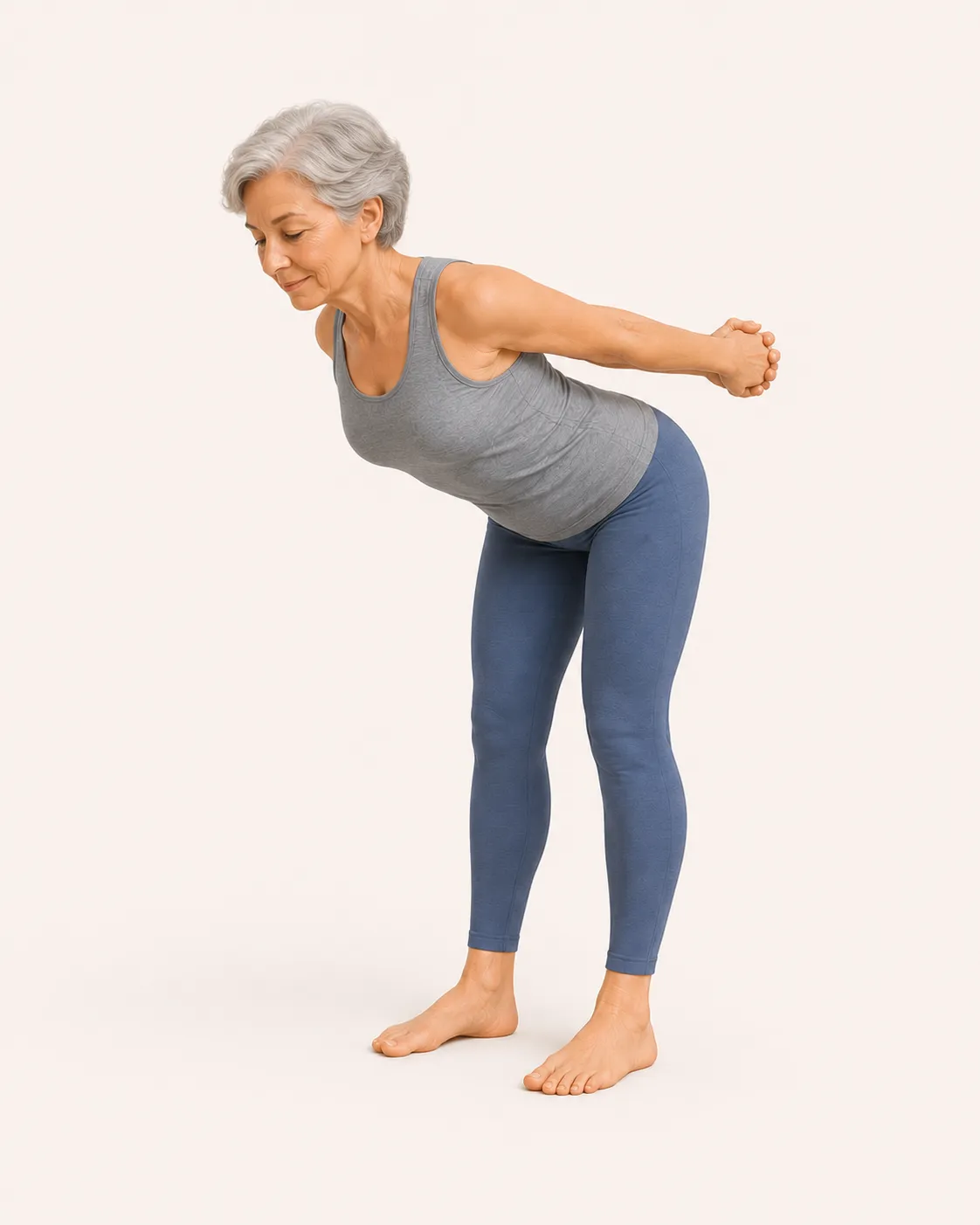
Seated Forward Fold
Lung & Large Intestine Meridians
How to do it:
- 1. Sit on the floor with legs extended straight in front of you
- 2. Flex your feet so toes point toward the ceiling
- 3. Inhale and lengthen your spine, sitting up tall
- 4. Exhale and hinge forward from the hips (not rounding the back)
- 5. Let your hands rest wherever they naturally fall: on your thighs, shins, ankles, or feet
- 6. Keep your head heavy and neck relaxed
- 7. Breathe deeply and allow gravity to deepen the stretch over 3-5 minutes
Key Points:
- • Don't worry about touching your toes. The stretch happens even if you can only reach your knees
- • Keep your back as straight as possible rather than rounding forward
- • If you feel intense pulling behind the knees, micro-bend your legs
Modifications for Seniors:
- • For tight hamstrings: Sit on a folded blanket or cushion to tilt pelvis forward
- • For very limited flexibility: Place a bolster or pillows on your lap to rest your torso on
- • For knee issues: Place a rolled towel under your knees for support
- • Alternative: Perform this stretch while seated in a chair, bending forward over your thighs
Contraindications: Skip this pose if you have herniated discs or acute back injury. Use extreme caution if you have osteoporosis.
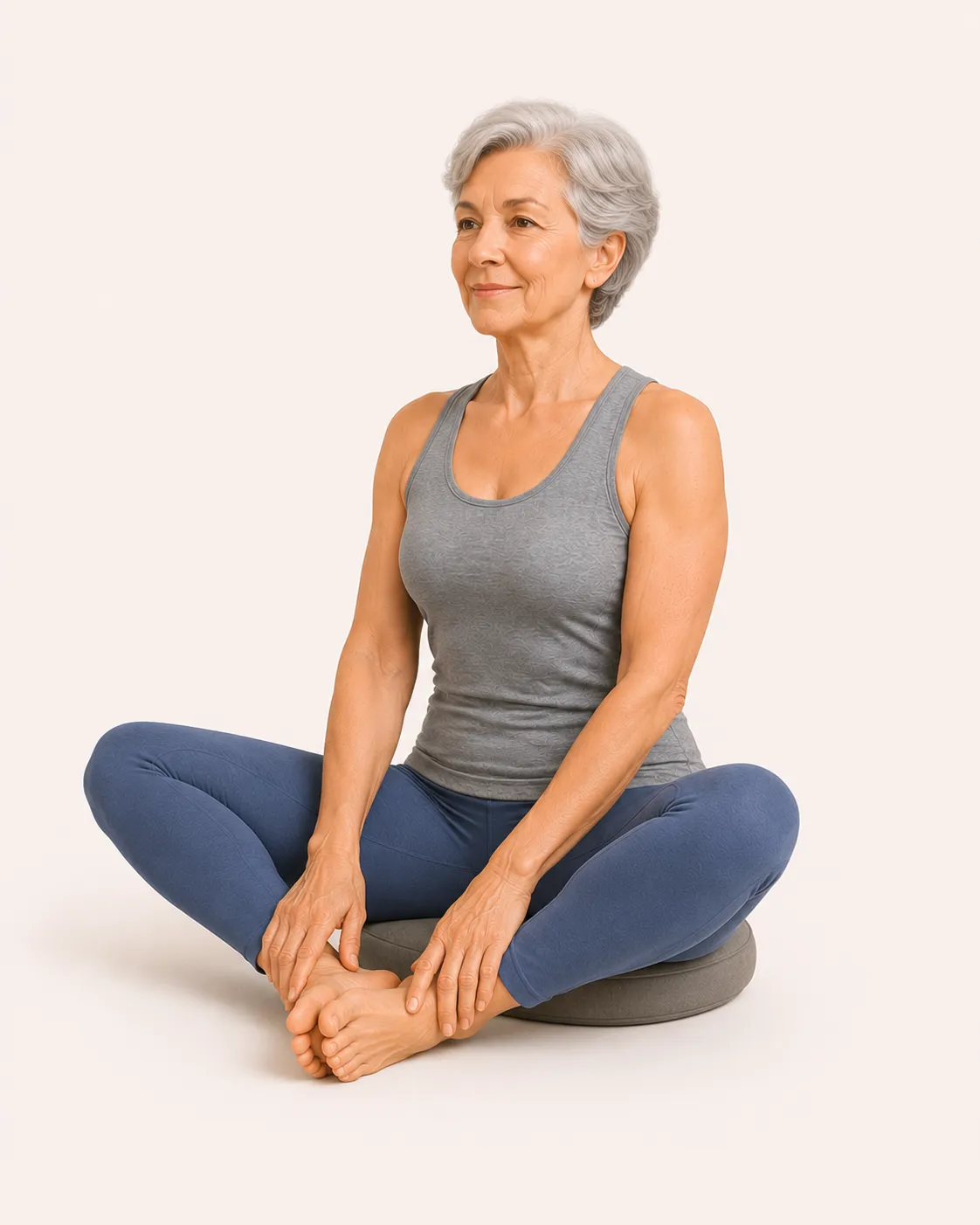
Straddle Stretch
Kidney & Bladder Meridians
How to do it:
- 1. Sit on the floor and spread your legs as wide as comfortable (creating a "V" shape)
- 2. Flex your feet so toes point up and slightly outward
- 3. Place your hands on the floor in front of you
- 4. Inhale to lengthen your spine
- 5. Exhale and walk your hands forward, allowing your torso to fold toward the floor
- 6. Rest on your forearms or extend your arms fully, bringing your chest toward the ground
- 7. Keep your back straight rather than rounded
- 8. Hold for 3-5 minutes, breathing into the stretch
Key Points:
- • Your legs don't need to be in a full split. Shoulder-width apart is fine
- • Keep your knees and toes pointing toward the ceiling (not rolling inward)
- • Hinge from the hips, maintaining length in the spine
Modifications for Seniors:
- • For tight hips/inner thighs: Narrow the leg position. Even 45 degrees between legs provides benefits
- • For lower back sensitivity: Sit on a cushion and only fold forward slightly
- • For comfort: Place a bolster or pillow under your chest to rest on
- • Alternative: Sit on the edge of a chair with legs spread, folding forward between them
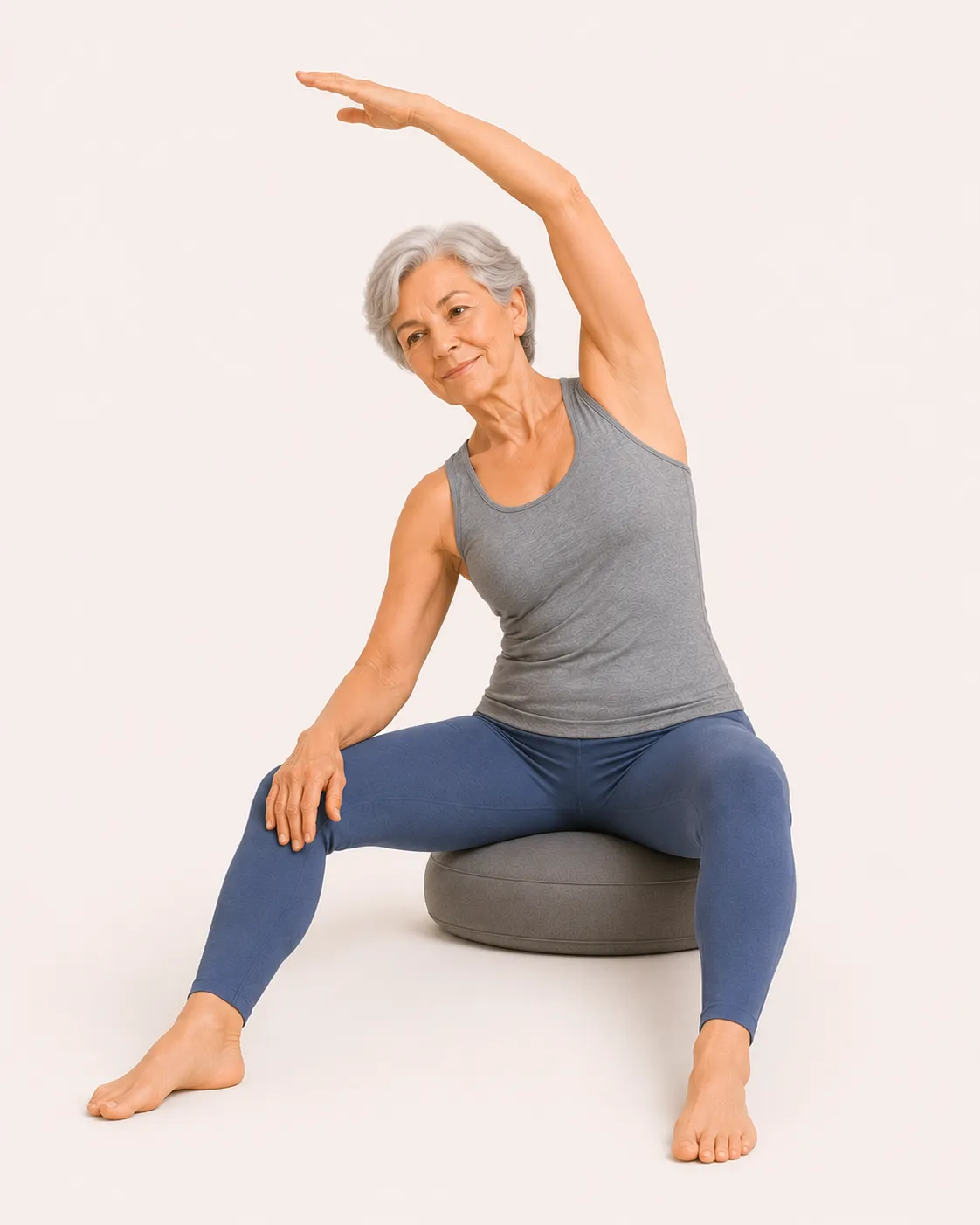
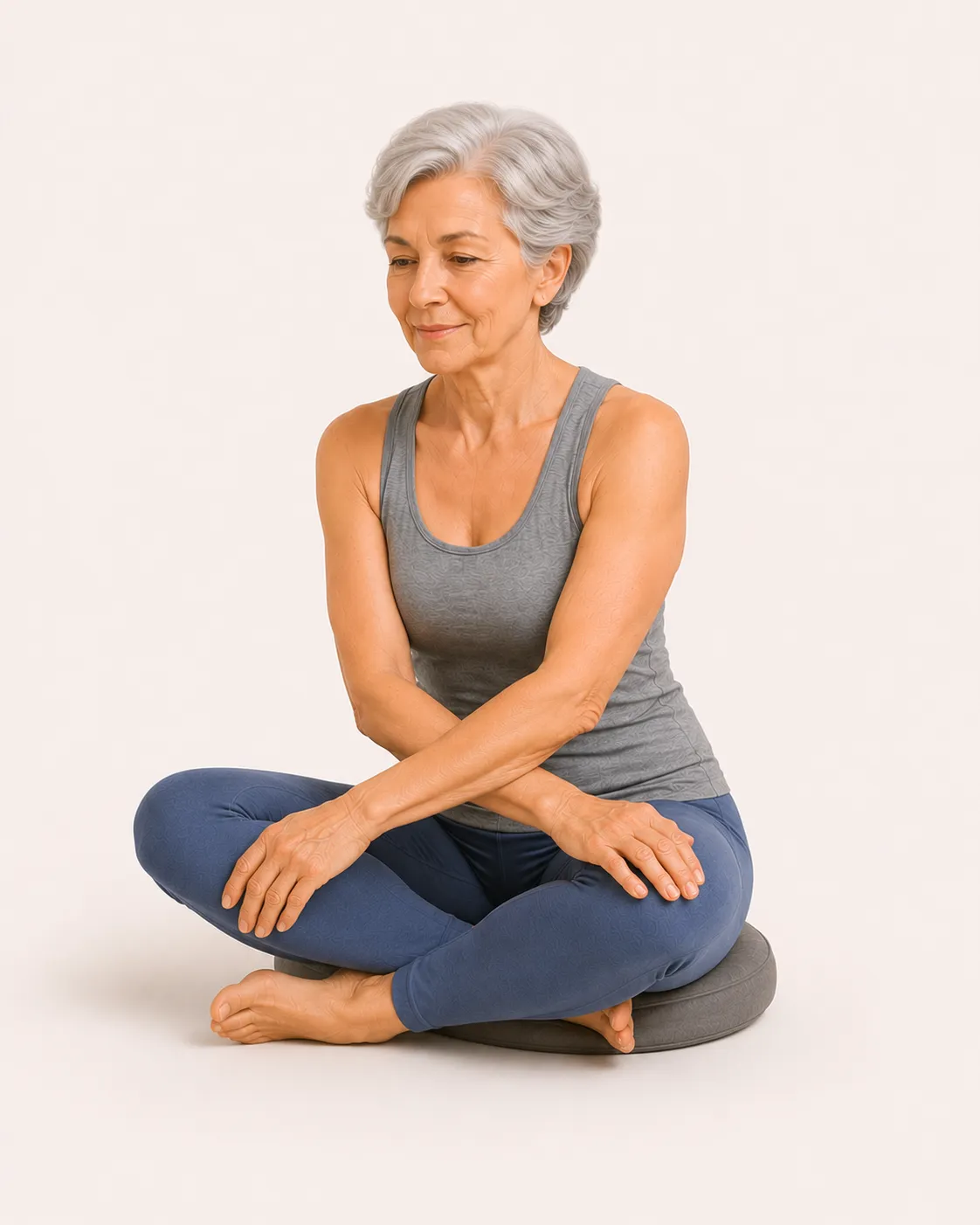
Cross-Legged Side Stretch
Liver & Gallbladder Meridians
How to do it:
- 1. Sit in a comfortable cross-legged position (one shin in front of the other)
- 2. Place your right hand on the floor beside your right hip
- 3. Inhale and raise your left arm overhead
- 4. Exhale and side-bend to the right, reaching your left arm over your head
- 5. Let your right elbow bend and rest your weight on your right forearm if comfortable
- 6. Keep your left sit bone grounded (don't lift off the floor)
- 7. Hold for 3-5 minutes, breathing into the left side of your ribcage
- 8. Return to center, switch the cross of your legs, and repeat on the other side
Key Points:
- • This is a side bend, not a forward bend. Keep your torso in line with your legs
- • Create length along the entire left side from hip to fingertips
- • Both sit bones should stay rooted to the floor
Modifications for Seniors:
- • For hip or knee discomfort: Sit in a chair or on a cushion instead of cross-legged
- • For tight shoulders: Rest your top arm on your head instead of reaching overhead
- • For balance concerns: Place your bottom hand on a yoga block for more stability
- • Alternative: Perform seated in a chair with feet flat on floor
Kneeling Back Bend
Heart, Small Intestine, Pericardium & Triple Warmer Meridians
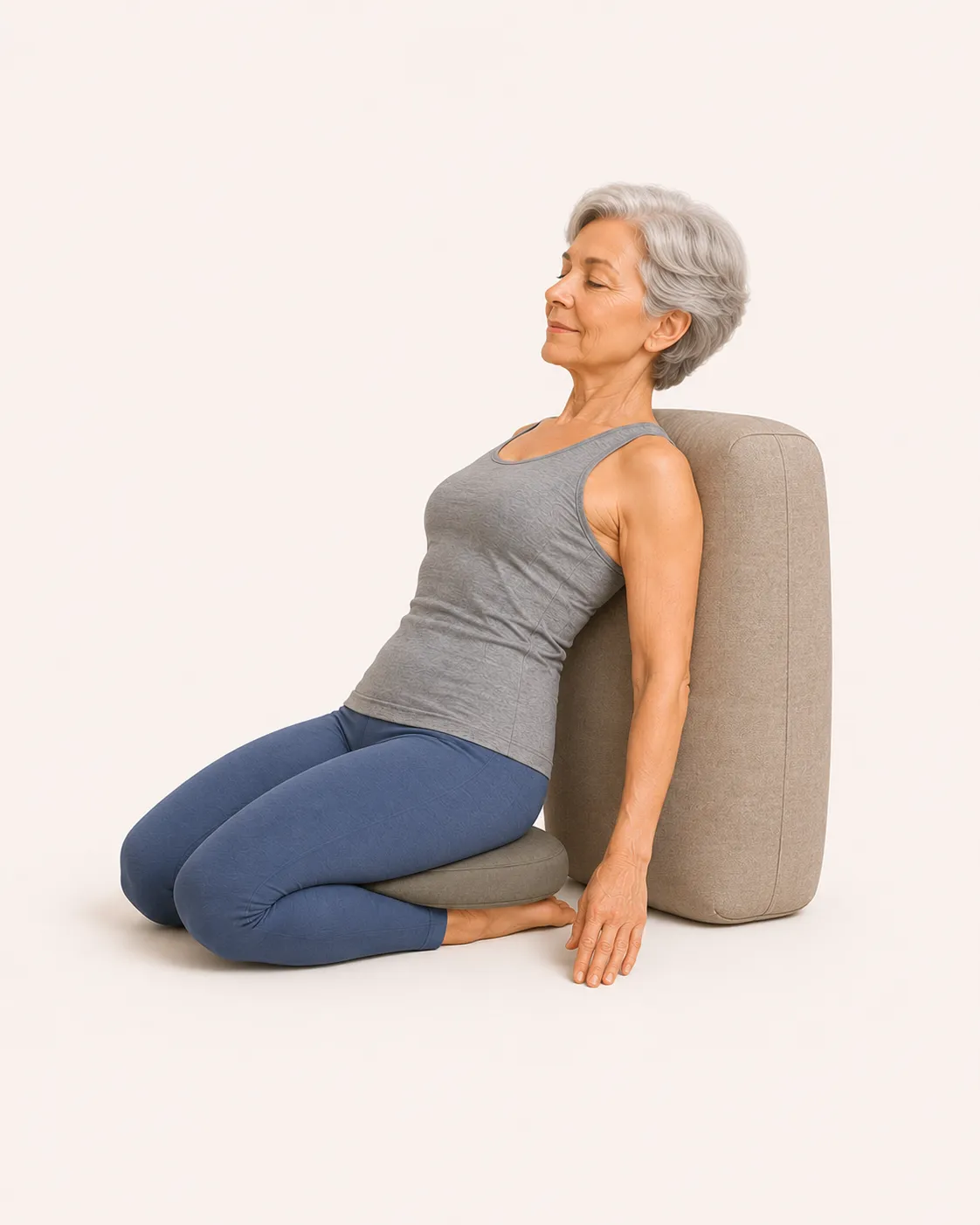
How to do it:
- 1. Kneel on the floor with knees hip-width apart
- 2. Point your toes so the tops of your feet rest on the floor
- 3. Place your hands on your lower back for support
- 4. Inhale and lift your chest toward the ceiling
- 5. Exhale and begin to arch backward, keeping your hips over your knees
- 6. If comfortable, reach your hands back to grasp your heels
- 7. Let your head drop back gently (only if neck feels comfortable)
- 8. Hold for 3-5 minutes, breathing deeply into the chest
Key Points:
- • The bend should come from the thoracic spine (mid-back), not just the lower back
- • Keep your core gently engaged to protect the lumbar spine
- • Don't force your head back if it causes neck strain
- • Your hips should stay aligned over your knees (not pushed forward)
Modifications for Seniors:
- • For knee pain: Place a cushion or folded blanket under your knees
- • For limited back flexibility: Keep hands on lower back and only arch slightly
- • For balance concerns: Practice near a wall or with a chair in front for support
- • Gentlest option: Lie on your back over a bolster or rolled blanket placed under your shoulder blades
Contraindications: Skip this pose if you have significant neck problems. Be very cautious with lower back issues. Avoid if you have high blood pressure, glaucoma, or retinal problems.
How to Practice Makko-Ho: Creating Your Routine
Makko-Ho is traditionally practiced as a complete sequence, moving through all four poses in order. Here's how to structure your practice:
Daily Practice Structure
Total Time: 15-25 minutes
Best Time to Practice
- Morning: Energizes you for the day, addresses morning stiffness
- Evening: Promotes deep relaxation and better sleep
- Afternoon: Relieves sitting tension, provides energy boost
The best time is whatever time you'll actually do it consistently.
Frequency Recommendations
- Minimum: 3 times per week to maintain flexibility
- Ideal: 5-6 times per week for steady improvement
- Optimal: Daily practice (even 10 minutes daily beats 30 minutes twice weekly)
Breathing During Makko-Ho
- • Breathe naturally through your nose (if possible)
- • Don't hold your breath. Tension often causes breath-holding
- • Use breath to deepen: Exhale to relax into the stretch, inhale to maintain position
- • Count breaths if it helps you stay present: Aim for 20-30 breaths per pose
Recommended Pattern: Inhale for 4 counts → Hold for 2 counts → Exhale for 6 counts. This 4-2-6 pattern enhances relaxation.
What You Need for Makko-Ho Practice
Essential Items
- • Yoga mat or padded surface
- • Comfortable clothing that allows full range of motion
- • Quiet space where you can practice uninterrupted
Helpful Props for Modifications
- • Yoga blocks (2) for support in forward fold
- • Bolster or firm pillows to rest on
- • Folded blankets (2-3) for cushioning
- • Yoga strap or belt for tight hamstrings
- • Chair for seated modifications
Common Mistakes to Avoid
- Forcing the Stretch
Enter each pose at about 60% of your maximum stretch capacity. The position will deepen naturally over the 3-5 minute hold as muscles relax.
- Not Holding Long Enough
The first 60-90 seconds, you're stretching the muscles. After that, you begin to affect the fascia, the deeper connective tissue that takes time to release.
- Holding Your Breath
Make breathing your primary focus. If you can't breathe deeply and steadily, you've gone too far into the stretch.
- Skipping Poses You Dislike
If a pose feels terrible, that probably indicates tightness that would benefit from regular practice. Give extra attention to the hardest poses (with modifications).
Combining Makko-Ho with Other Japanese Practices
Makko-Ho + Radio Taiso
Morning: Radio Taiso (3 minutes of dynamic movement) | Evening: Makko-Ho (15 minutes of deep stretching). Together, they create balanced fitness addressing cardiovascular health, flexibility, strength, and balance.
Makko-Ho + the Japanese Towel Method
Makko-Ho stretches you actively; the Japanese towel method (Fukutsuji) is completely passive. On days when the four poses feel like too much, lie over a rolled towel for a few minutes instead and let gravity do the work.
Makko-Ho + Shinrin-Yoku
Practice Makko-Ho 5-6 days at home (15-20 minutes), then take a 2-3 hour Shinrin-Yoku forest bathing walk on weekends. Both practices emphasize mindfulness and present-moment awareness.
Frequently Asked Questions
How long before I notice results? ▼
Can I practice Makko-Ho if I'm very stiff or inflexible? ▼
Is it normal to feel emotional during or after practice? ▼
Do I need to believe in meridians for Makko-Ho to work? ▼
Is Makko-Ho better than yoga? ▼
Can I practice after eating? ▼
Why Makko-Ho Is Perfect for Seniors Over 50
- It's Time-Efficient: At 15-20 minutes for a complete practice, it fits into even busy schedules.
- It's Low-Risk: The slow, controlled nature minimizes injury risk. No bouncing, jumping, or quick transitions.
- It Requires No Equipment: A mat and comfortable clothing are all you need.
- It's Infinitely Adaptable: Every pose has modifications ranging from very gentle to quite challenging.
- It Addresses Common Problem Areas: Forward hunched posture, tight hips, stiff hamstrings, inflexible spine.
- It's Meditative: The long holds create natural meditation, providing mental health benefits alongside physical ones.
Start Your Makko-Ho Practice Today
You now understand the theory, benefits, and practice of Makko-Ho. This elegant system of four stretches can transform your flexibility, energy, and overall wellbeing, but only if you actually do it.
The beauty of Makko-Ho is its simplicity. You don't need to learn complex sequences, buy expensive equipment, or commit hours of your day. Just 15 minutes of mindful stretching can make a profound difference in how you feel.
The wisdom of Wataru Nagai, who lived to 102 practicing these four stretches daily, is now available to you. Will today be the day you begin your Makko-Ho journey?
Medical Disclaimer
This article is for informational purposes only and should not replace professional medical advice. Consult with your healthcare provider before beginning any new exercise program, especially if you have existing health conditions, injuries, or concerns. If you experience pain during these stretches, stop immediately and seek professional guidance.