Seiza: The Japanese Floor Sitting Posture That Improves Posture and Knee Health After 50
In Western culture, most of us spend our days sitting in chairs. By the time we reach 50, many have lost the ability to sit comfortably on the floor altogether. Yet in Japan, people of all ages regularly sit in Seiza, a formal kneeling posture that maintains joint health, improves posture, and supports mental clarity.
Plays from YouTube. Pressing play sends data to Google. Privacy policy
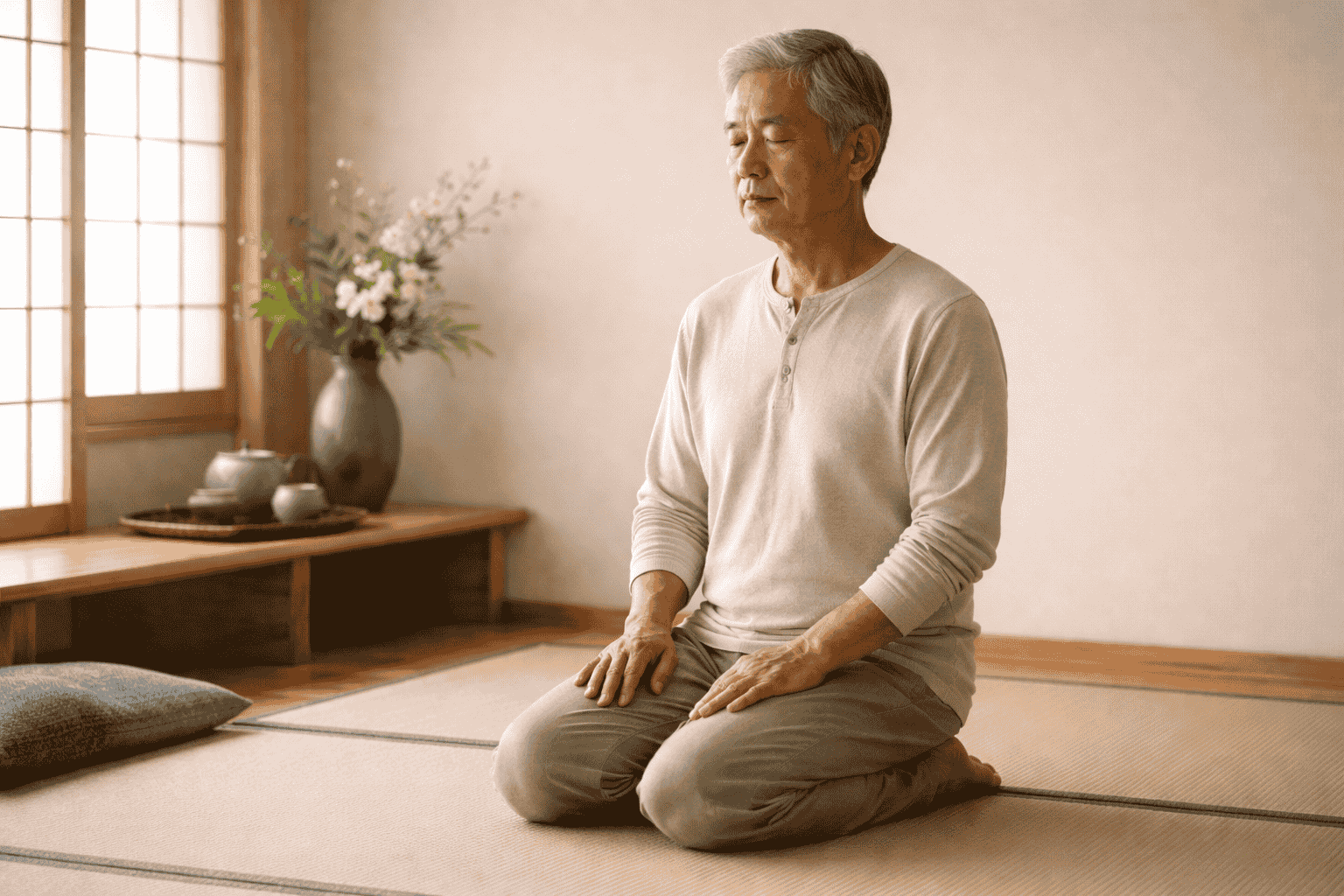
Seiza (pronounced "say-zah") literally means "correct sitting" in Japanese. It involves kneeling with your buttocks resting on your heels, your spine straight, and your hands resting gently on your thighs. While it might sound simple, Seiza is a complete body practice that offers remarkable benefits, especially for people over 50 who want to maintain mobility, flexibility, and functional strength as they age.
The good news? Even if you haven't sat on the floor in decades, you can learn Seiza with proper modifications and gradually work toward comfortable practice. This ancient posture can help reverse some of the flexibility loss and postural decline that comes with modern sedentary living.
What Is Seiza? Understanding Traditional Japanese Sitting
Seiza is the formal, traditional way of sitting in Japan. In Seiza, you kneel on the floor with the tops of your feet flat on the ground, your big toes overlapping or touching, and your buttocks resting on your heels. Your spine remains upright and straight, shoulders are relaxed, and hands rest on the upper thighs.
Traditional Uses of Seiza
Historical Context
Seiza became widespread during the Edo period (1603-1868). The adoption was partly practical. It allows for quick movement to standing (important in martial contexts) and demonstrates respect in formal settings. It also reflects Japanese aesthetic values: discipline, mindfulness, and the integration of physical form with mental state.
Why Floor Sitting Matters for Health
Before chairs became common, humans sat on the floor in various positions. This natural practice maintained hip and ankle flexibility, strengthened muscles needed to get up and down, and kept joints mobile.
A 2012 study in the European Journal of Preventive Cardiology found that people who could sit down on the floor and stand back up with minimal support had significantly lower mortality rates.
10 Powerful Health Benefits of Seiza for Seniors Over 50
1. Improved Posture and Spinal Alignment
Seiza naturally encourages proper spinal alignment with active core engagement, natural lumbar curve, and shoulders pulled back. This strengthens muscles that support good posture.
2. Enhanced Knee Health and Function
Properly practiced Seiza maintains full knee flexion range of motion, strengthens supporting muscles, promotes circulation, and improves proprioception around the knee.
3. Increased Hip and Ankle Flexibility
Seiza stretches and mobilizes multiple joints: ankles (plantar flexion), knees (full flexion), and hips (active hip flexors). This multi-joint flexibility is functional for real-life activities.
4. Strengthened Lower Body Muscles
Getting into and out of Seiza requires significant leg strength: quadriceps, hamstrings, gluteal muscles, and calves all work together. This functional strength training happens naturally.
5. Improved Circulation and Reduced Swelling
The alternating compression and release when coming out of Seiza stimulates circulation, promotes lymphatic drainage, and can reduce chronic ankle and foot swelling.
6. Enhanced Core Strength and Stability
Maintaining an upright spine requires continuous, gentle core engagement. This sustained low-level activation builds endurance in deep stabilizing muscles, obliques, and erector spinae.
7. Better Balance and Stability
Transitioning into and out of Seiza challenges your balance and proprioception, improving awareness of your center of gravity and strengthening stabilizing muscles, reducing fall risk.
8. Digestive System Support
Many practitioners report improved digestive comfort when sitting in Seiza after meals. The upright posture prevents compression of digestive organs and may facilitate optimal function.
9. Mental Clarity and Mindfulness
The physical discipline of Seiza cultivates present-moment awareness, patience, discipline, acceptance, and calmness. In Zen Buddhism, Seiza is considered a form of practice itself.
10. Increased Functional Independence
Seiza maintains the ability to get down to and up from the floor, reach items at floor level, play with grandchildren, and garden, all directly linked to quality of life as you age.
Does Seiza Lengthen Hip Flexors? The Science-Backed Answer
Short answer: Yes, but with important nuances. Seiza does create a gentle stretch in the hip flexors (particularly the iliopsoas and rectus femoris) through sustained hip extension. Though it's NOT the most effective method for lengthening tight hip flexors, and here's why:
How Seiza Affects Hip Flexors
When you sit in Seiza:
- •Your hips are in a partially extended position
- •This creates passive tension in the anterior hip structures
- •The stretch is mild compared to dedicated hip flexor stretches
- •The primary benefit is maintaining existing flexibility, not aggressive lengthening
The Anatomy of Hip Flexor Stretching in Seiza
The hip flexor group consists of several muscles:
- •Iliopsoas (psoas major and iliacus)
- •Rectus femoris (part of the quadriceps)
- •Tensor fasciae latae (TFL)
- •Sartorius
In Seiza position, these muscles experience varying degrees of stretch:
- •Rectus femoris: Stretched significantly because the knee is fully flexed AND the hip is extended
- •Iliopsoas: Mild stretch from hip extension (about 10-15 degrees)
- •TFL and Sartorius: Minimal engagement
Comparison: Seiza vs. Dedicated Hip Flexor Stretches
Seiza provides:
- •Intensity: Passive, low-intensity stretch (2-3/10)
- •Duration: Sustainable for long periods (5-20 minutes)
- •Type: Gentle maintenance and prevention
- •Best for: Preventing hip flexor shortening from prolonged sitting
- •Result: Maintains existing flexibility
Dedicated stretches (like kneeling hip flexor lunge) provide:
- •Intensity: Active, high-intensity stretch (6-8/10)
- •Duration: Short holds (30-90 seconds)
- •Type: Targeted lengthening
- •Best for: Reversing existing tightness
- •Result: Increases range of motion significantly
Who Benefits Most from Seiza for Hip Flexors?
Ideal candidates:
- •Office workers who sit in chairs 6-8 hours daily (prevention)
- •Seniors maintaining existing hip mobility
- •People combining it with other flexibility work
- •Those seeking functional, sustainable practice
Not ideal for:
- •Athletes needing aggressive hip flexor lengthening
- •People with severe hip flexor contractures (need PT)
- •Those looking for quick results (need dedicated stretches)
- •Anyone with contraindicated knee conditions
What the Evidence Suggests
Regularly spending time in kneeling positions like Seiza appears to help preserve the length of the hip flexors and the mobility of the knees and ankles, rather than producing dramatic new gains. Compared with hours spent in a chair, this matters: chair-sitting shortens the hip flexors over time, while floor postures keep them at their natural length.
The key takeaway: Seiza helps prevent loss of flexibility rather than creating dramatic new flexibility.
The Bottom Line on Seiza and Hip Flexors
Seiza is excellent for:
- •Maintaining hip mobility you already have
- •Preventing hip flexor shortening from modern sitting habits
- •Creating sustainable, daily movement practice
- •Supporting overall functional mobility
Seiza is NOT sufficient for:
- •Correcting severely shortened hip flexors
- •Rapid flexibility improvements
- •Competitive athletic demands
Recommended Approach: Combining Seiza with Targeted Stretching
For optimal hip flexor health:
- 1. Daily Seiza practice: 5-10 minutes for maintenance
- 2. Dedicated hip flexor stretches: 2-3x per week
- •Kneeling hip flexor lunge
- •Standing quad stretch (addresses rectus femoris)
- •Supine hip flexor stretch
- 3. Active hip extension exercises: Glute bridges, hip thrusts
- 4. Regular movement breaks: Stand and walk every 30-60 minutes
Alternative Japanese Practices for Hip Flexors
If you're interested in Japanese wellness traditions specifically for hip flexibility, consider:
- •Makko-Ho stretching: Includes forward folds that complement Seiza
- •Yoga-inspired stretches: Many overlap with traditional Japanese practices
- •Walking meditation (Kinhin): Active hip extension with mindful movement
How to Practice Seiza: Step-by-Step Guide
Learning Seiza requires patience, especially if you've been chair-sitting for decades. Start with modifications and gradually work toward the traditional position.
Getting Into Position
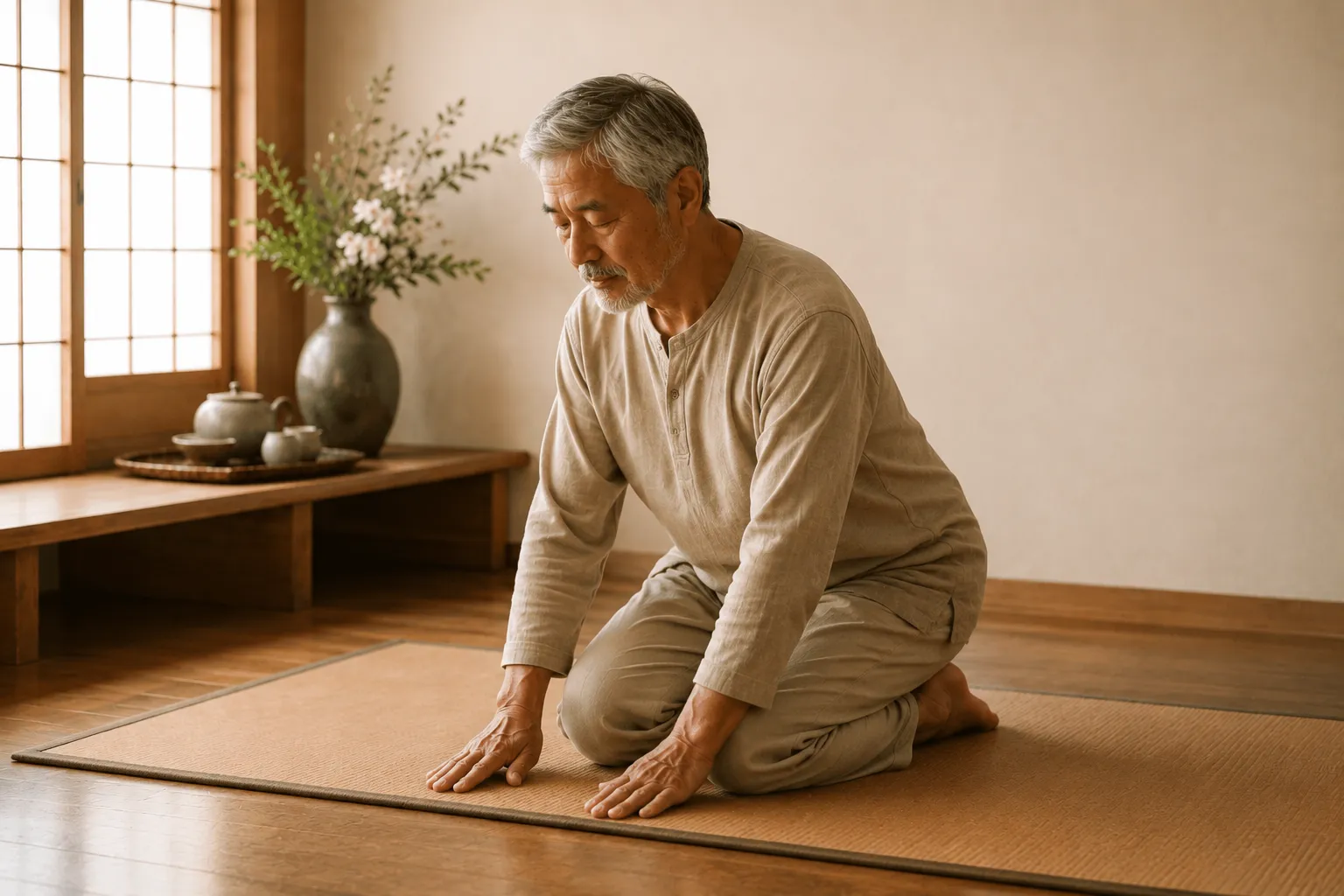
Start kneeling
Come to your hands and knees on a mat or soft surface
Bring your knees together
Your big toes should touch or slightly overlap behind you
Sit back
Lower your buttocks to rest on your heels
Align your spine
Sit up tall, lengthening through the crown of your head
Position your hands
Rest them gently on your upper thighs, palms down or up
Relax your shoulders
Draw them down and back, opening the chest
Soften your face
Release tension in your jaw, eyes, and forehead
Breathe naturally
Allow your breath to flow easily
Key Points of Proper Form
Coming Out of Position
- 1. Lean forward and place your hands on the floor in front of your knees
- 2. Shift your weight and transfer to your hands
- 3. Lift your hips and rise up to a kneeling position
- 4. Step forward and bring one foot forward into a lunge position
- 5. Stand up by pressing through the front foot
- 6. Shake out your legs and walk a few steps to restore circulation
Modifications for Different Levels
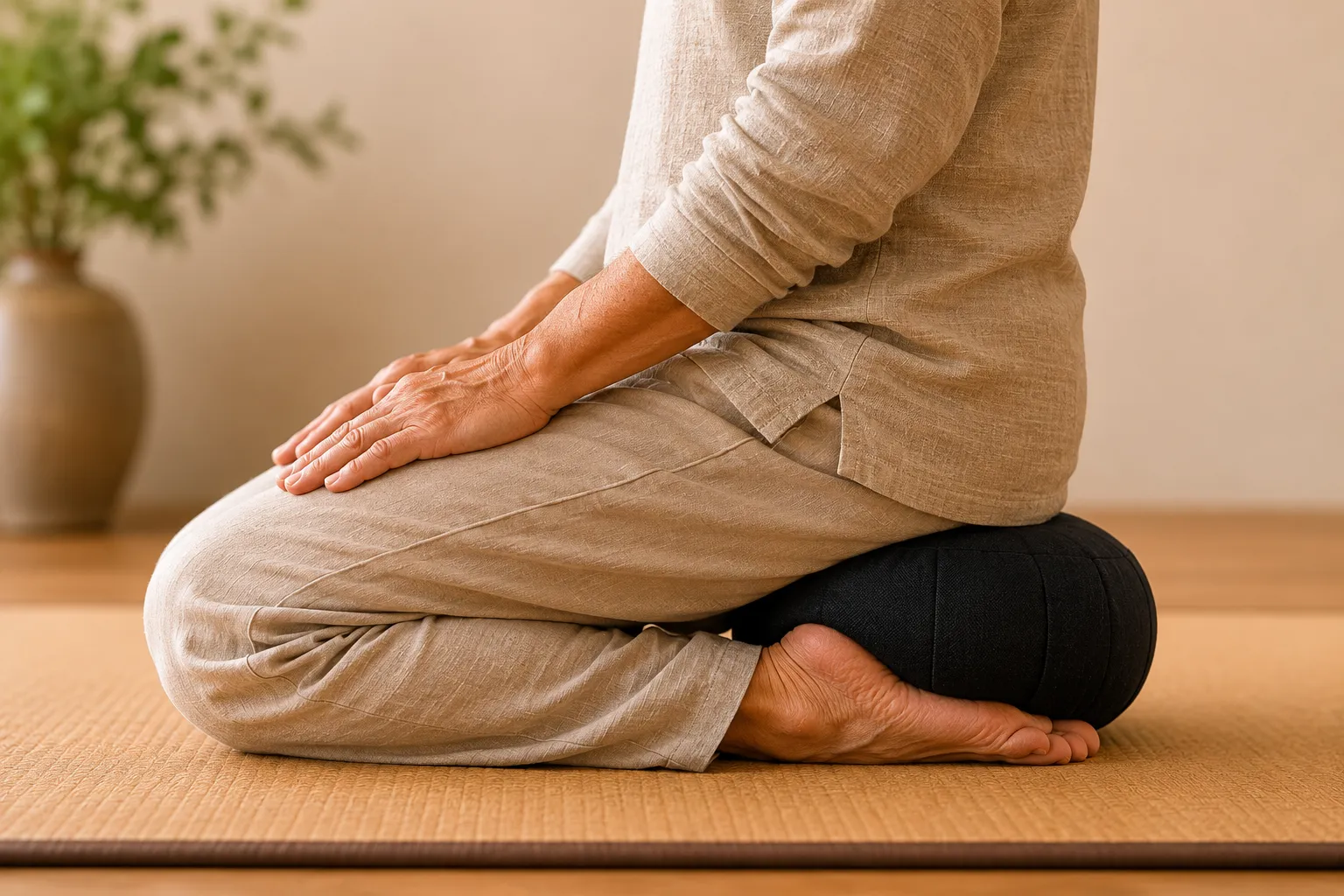
Most seniors will need to start with modifications and may continue using them indefinitely. This is perfectly fine. The benefits come from the practice at your level, not from achieving a specific ideal form.
Level 1: Significant Modifications (Best for Beginners)
Option 1: Seiza Bench
Use a dedicated Seiza bench that supports your weight. Your feet slide under the bench, removing pressure from ankles. Excellent for knee or ankle issues.
Option 2: Cushion Stack
Stack 2-4 firm cushions or folded blankets. Sit on the stack with knees on the floor. Gradually reduce height as flexibility improves.
Option 3: Chair Seiza
Kneel in front of a chair and rest your buttocks on the chair seat edge. Provides most postural benefits with minimal knee stress.
Level 2: Moderate Modifications
Single Cushion Support
Place one firm cushion or zafu between your heels and buttocks. Reduces knee flexion angle while maintaining position.
Ankle Support
Roll a hand towel under your ankles. This lifts the feet slightly, reducing stretch on the tops of your feet, often the limiting factor.
Separated Knees
Allow knees to separate more than traditionally correct. Reduces pressure and provides most postural benefits.
Level 3: Traditional Seiza with Short Duration
Progressive Duration
Start with 30-60 seconds in proper Seiza. Gradually increase by 15-30 seconds per week. Work up to 5-10 minutes of continuous sitting.
Alternate Positions
Switch between Seiza and other floor sitting positions. Use Seiza for formal practice but allow variety during longer sitting periods.
Time Recommendations
30s-1min
Absolute Beginners
2-5 min
Developing Practice
10-20 min
Established Practice
30-60+ min
Advanced Practitioners
Don't compare yourself to lifelong practitioners. Compare yourself to yourself last week.
Common Mistakes and How to Avoid Them
Forcing the Position
Pushing through significant pain to achieve "proper" form can damage joints.
Better: Use modifications until flexibility develops naturally. Discomfort is acceptable. Pain is not.
Collapsing the Spine
Without core engagement, many people slump forward, losing postural benefits.
Better: Imagine a string pulling the crown of your head toward the ceiling. Engage core gently.
Holding Your Breath
Tension can cause breath holding, increasing discomfort and preventing relaxation.
Better: Make conscious breathing your priority. If you can't breathe comfortably, you've gone too far.
Practicing on Hard Floors
Kneeling on hardwood or tile can damage knee joints and cause unnecessary pain.
Better: Always practice on a yoga mat, carpet, or dedicated cushioning. Protect your joints.
What You Need for Seiza Practice
Essential
- • Yoga mat or cushioned surface - Protects knees from hard floors
- • Comfortable clothing - Loose pants that allow knee bending
Highly Recommended
- • Seiza bench - Purpose-built support, traditional or adjustable
- • Meditation cushion (zafu) - Round cushion for elevation
- • Yoga blocks - Adjustable height substitute for cushions
Optional Enhancements
- • Knee pads - Extra cushioning for sensitive knees
- • Ankle cushion - Small rolled towel or foam roller
- • Meditation mat (zabuton) - Larger flat cushion under entire lower body
Creating Your Seiza Practice Routine
Morning Practice
5-10 minutes for meditation or breathing. Sets a mindful tone for the day.
Meal Times
Sit in Seiza while eating. Promotes mindful eating and connects to Japanese tradition.
Exercise Integration
Begin Radio Taiso from Seiza. Practice Hara breathing while seated. Use as rest position.
Evening Wind-Down
5-15 minutes for reflection or reading. Stretch in Seiza before bed.
12-Week Progressive Training Program
Weeks 1-2
Seiza bench or high cushion stack, 2-3 min daily
Weeks 3-4
Reduce cushion height by half, 3-5 min daily
Weeks 5-6
Single cushion, 5-7 min daily
Weeks 7-8
Thin cushion or towel roll under ankles, 7-10 min
Weeks 9-10
Traditional Seiza 1-2 min, then cushion
Weeks 11-12
Gradually increase to 5+ min traditional
Combining Seiza with Other Japanese Practices
Seiza + Hara Breathing
Perfect combination: sit in Seiza, place hands on lower belly, and practice Hara breathing. The upright posture facilitates optimal diaphragm movement.
Seiza + the Japanese Towel Method
Seiza works your knees, ankles and upright spine. The Fukutsuji towel method is its lying-down counterpart: a few quiet minutes over a rolled towel that lets the lower back and chest open after a day of sitting.
Seiza + Zazen (Meditation)
Traditional practice: sit in Seiza with hands in meditation mudra. The formal posture supports alert, wakeful meditation.
Seiza + Tea Ceremony
Learn basic tea ceremony movements. Practice serving and receiving tea while in Seiza. Combines physical practice with cultural appreciation.
Frequently Asked Questions
Is Seiza safe for people with knee replacements? ▼
This requires consultation with your orthopedic surgeon. Generally, total knee replacements can achieve the flexion needed for Seiza, but recovery timeline and individual healing vary. Many surgeons approve modified Seiza (with bench or cushion support) after full recovery. Never practice full Seiza immediately after knee surgery.
Can I practice Seiza if I have arthritis? ▼
Mild to moderate arthritis may actually benefit from gentle Seiza practice, as movement is beneficial for arthritis. Though, start with significant modifications (bench or high cushion), practice when your joints are warmed up, never force through pain, and consult your rheumatologist or physical therapist.
Will Seiza damage my knees over time? ▼
When practiced properly with appropriate modifications, Seiza does not damage knees. The Japanese have practiced it for centuries without higher rates of knee problems. But forcing the position before you're ready, or practicing on hard surfaces without cushioning, can cause damage. Listen to your body and progress gradually.
What if I can never achieve traditional Seiza? ▼
That's completely acceptable. Some people have structural limitations (body proportions, previous injuries, joint conditions) that prevent traditional Seiza even with extensive practice. Using modifications permanently is perfectly valid, and you still receive most benefits from the practice.
How does Seiza compare to chair sitting for health? ▼
Seiza is generally superior to typical chair sitting because it requires active postural engagement (chairs allow slumping), maintains hip and knee flexibility, strengthens legs and core, and promotes better spinal alignment. Ideally, vary your sitting positions throughout the day.
My feet fall asleep immediately. What can I do? ▼
This is extremely common when starting Seiza. Solutions: start with very short durations (30-60 seconds), use a Seiza bench to remove weight from your feet, shift your weight slightly from side to side, come out as soon as numbness begins. With consistent practice, your circulation adapts and this improves significantly.
Why Seiza Is Perfect for Seniors Over 50
Maintains Crucial Flexibility
The mobility needed for Seiza is the same you need for functional independence.
It's Preventive
Practicing now maintains abilities you'll need in your 70s and 80s.
Requires No Equipment
With just a cushion, you can practice anywhere.
It's Scalable
Everyone can practice at their level, from beginner to advanced.
Supports Multiple Practices
Foundation for breathing, meditation, tea ceremony, and more.
It's Empowering
Builds confidence and reverses the narrative of inevitable decline.
Start Your Seiza Practice Today
The Japanese have a saying: "Fall seven times, stand up eight." Your floor sitting journey begins with a single kneel. That first awkward minute is the most important. It's the moment you decide to reclaim capabilities you thought were lost.
Will today be the day you take that first kneel?
Medical Disclaimer
This article is for informational purposes only and should not replace professional medical advice. Consult with your healthcare provider before beginning Seiza practice, especially if you have knee injuries, joint replacements, arthritis, or other musculoskeletal conditions. If you experience sharp pain during practice, stop immediately and seek professional guidance. Seiza should be practiced gradually with appropriate modifications for your individual needs and capabilities.