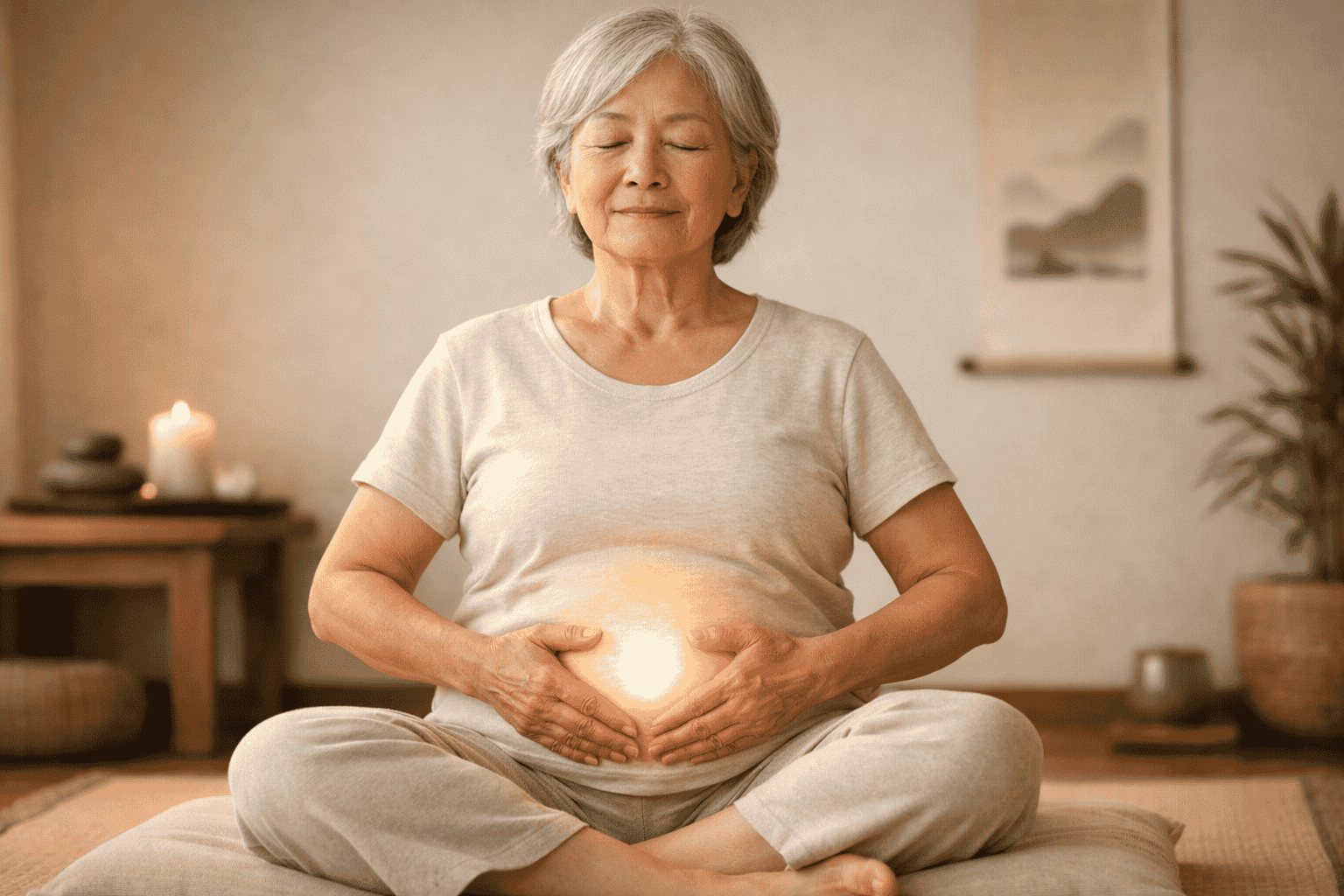
What if you could lower your blood pressure, reduce anxiety, improve digestion, boost your energy, and enhance your sleep quality, all through something you're already doing 20,000 times per day? This is the promise of Hara breathing, a Japanese breathing technique that transforms the automatic, shallow breathing most of us do into a powerful tool for health and vitality.
Hara breathing, also known as belly breathing or diaphragmatic breathing, is the practice of breathing deeply into your lower abdomen rather than shallowly into your chest. The word "Hara" (pronounced "hah-rah") refers to the area about two inches below your navel, considered the body's center of energy, balance, and vitality in Japanese culture.
While Westerners often associate proper breathing with chest expansion, Japanese martial artists, meditation practitioners, and wellness experts have long known that true power and calm come from breathing into the Hara. This isn't just ancient wisdom. Modern science has confirmed that diaphragmatic breathing triggers profound physiological changes that benefit virtually every system in your body.
Understanding Hara: The Body's Energy Center
In Japanese tradition, the Hara (also called "Tanden" or "Seika Tanden") is located approximately two finger-widths below the navel, deep in the center of the lower abdomen. This area is considered the body's gravitational center and the source of vital energy (ki or chi).
Traditional Japanese practices (from martial arts like Aikido and Kendo to meditation practices like Zazen) all emphasize cultivating awareness and power in the Hara. Masters describe it as the seat of intuition, courage, and physical strength.
What the Hara Corresponds to in Western Medicine
- The location of the diaphragm (your primary breathing muscle)
- The solar plexus (a major nerve center)
- The enteric nervous system (sometimes called the "second brain")
- The body's center of gravity
The Problem with Chest Breathing
Most adults, especially those over 50, have developed a habit of chest breathing (also called thoracic or shallow breathing). This pattern often develops due to chronic stress, slouched sitting posture, and age-related stiffness.
Why Chest Breathing Is Problematic
Shallow breathing signals danger to your brain, triggering fight-or-flight mode and keeping you in constant mild stress.
The lower portions of your lungs have better blood flow. Using only upper lungs means less oxygen per breath.
Chest breathing overworks neck, shoulder, and upper back muscles, leading to chronic tension and pain.
Poor oxygenation affects brain function, contributing to brain fog and difficulty concentrating.
Powerful Health Benefits of Hara Breathing for Seniors
Research on diaphragmatic breathing has revealed remarkable benefits, particularly for older adults:
1. Stress and Anxiety Reduction
Even a few minutes of slow diaphragmatic breathing can quiet the stress response, lower anxiety, and create a noticeable sense of calm. Practiced consistently over several weeks, deep breathing is widely associated with reduced rumination and a steadier mood.
2. Support for Healthier Blood Pressure
Slow diaphragmatic breathing activates the parasympathetic nervous system, which gently lowers heart rate and supports healthier blood pressure over time. For people already on blood-pressure medication, daily breathing practice can be a useful complementary habit, but never a replacement for prescribed treatment.
3. Improved Cardiovascular Function
Increases Heart Rate Variability (HRV), improves cardiac efficiency, lowers resting heart rate, and enhances blood circulation through diaphragm movement.
4. Enhanced Lung Function
Regular practice strengthens the diaphragm and intercostal muscles, improving vital capacity, oxygen exchange efficiency, and reducing breathlessness.
5. Improved Digestion
The diaphragm's movement creates a gentle massage effect on abdominal organs, stimulating peristalsis, reducing bloating and constipation, and improving nutrient absorption.
6. Better Sleep Quality
A 2020 study found that participants who practiced diaphragmatic breathing before bed fell asleep faster and experienced fewer nighttime awakenings.
7. Reduced Chronic Pain
Reduces pain perception through relaxation response, endorphin release, distraction from pain awareness, and reduced inflammation from lower stress hormones.
8. Enhanced Mental Clarity
Better brain oxygenation supports improved concentration, better memory function, reduced brain fog, and enhanced mental energy.
9. Increased Energy
Improves oxygen delivery to cells, reduces energy drain from chronic stress, supports better sleep, and enhances mitochondrial function.
10. Improved Posture and Core Strength
Proper diaphragmatic breathing develops awareness of postural alignment, engagement of deep core muscles, and flexibility in the ribcage and spine.
How to Practice Hara Breathing: Step-by-Step Guide
Finding Your Hara
- 1. Sit or stand comfortably with good posture
- 2. Place one hand on your chest, the other on your belly below the navel
- 3. Imagine a point about two finger-widths below your navel, deep in the center of your body
- 4. This is your Hara, and your breathing should originate from here
Basic Hara Breathing Technique
Position:
- • Sit comfortably in a chair or on a cushion on the floor
- • Keep your spine straight but not rigid
- • Relax your shoulders down and back
- • Place your hands on your lower belly to feel the movement
- • Close your eyes or maintain a soft, downward gaze
The Technique:
Key Points:
- • Your belly should move outward on inhale, inward on exhale
- • Your chest should move minimally
- • Breathing should be smooth, quiet, and effortless
- • Never force or strain
Advanced Hara Breathing Techniques
4-7-8 Breathing (Natural Tranquilizer)
Excellent for anxiety and insomnia, popularized by Dr. Andrew Weil
- 1. Place the tip of your tongue behind your upper front teeth
- 2. Exhale completely through your mouth, making a "whoosh" sound
- 3. Close your mouth and inhale through your nose for 4 counts
- 4. Hold your breath for 7 counts
- 5. Exhale through your mouth for 8 counts, making the whoosh sound
- 6. Repeat 3-4 times
Best for: Before bed, during anxious moments, when you need to calm down quickly
Box Breathing (Square Breathing)
Used by Navy SEALs for stress management
- 1. Inhale through your nose for 4 counts while expanding your belly
- 2. Hold your breath for 4 counts
- 3. Exhale through your nose for 4 counts while drawing belly in
- 4. Hold empty for 4 counts
- 5. Repeat for 5-10 minutes
Best for: Before important events, when you need mental clarity, during stressful situations
Extended Exhale Breathing
Maximizes relaxation with longer exhale
- 1. Inhale into your Hara for 4 counts
- 2. Pause for 2 counts
- 3. Exhale for 8 counts (twice as long as inhale)
- 4. Pause for 2 counts
- 5. Repeat for 5-10 minutes
Best for: Evening relaxation, before sleep, when feeling anxious or overwhelmed
Coherent Breathing (Resonant Breathing)
Aims for 5 breaths per minute for maximum HRV benefits
- 1. Inhale for 6 counts
- 2. Exhale for 6 counts (no pauses)
- 3. Continue for 10-20 minutes
Best for: Deep physiological benefits, during meditation, cardiovascular health
Creating Your Daily Hara Breathing Practice
Recommended Practice
- Minimum: 5 minutes once daily
- Ideal: 10 minutes twice daily
- Optimal: 15-20 minutes twice daily plus mini-sessions
Best Times to Practice
- Morning: Sets calm tone, energizes without caffeine
- Before meals: Improves digestion
- Afternoon: Counteracts energy slump
- Evening: Prepares body for sleep
Common Mistakes and Corrections
Reverse Breathing
Pulling belly in on inhale and pushing out on exhale.
Fix: Place a book on your belly while lying down. Watch it rise on inhale, fall on exhale.
Breathing Too Fast
Rushing defeats the purpose of the practice.
Fix: Count slowly: Inhale 4, pause 2, exhale 6, pause 2.
Forcing the Breath
Straining creates tension rather than relaxation.
Fix: Think of your breath as a gentle tide, and let it flow naturally.
What You Need for Hara Breathing Practice
Essential (You Already Have!)
- • Your breath
- • A place to sit or lie down
- • 5-10 uninterrupted minutes
Helpful Optional Items
- • Meditation cushion (zafu)
- • Chair with good back support
- • Timer with gentle chime
- • Blanket for warmth
- • Journal for tracking
Frequently Asked Questions
How long before I notice benefits? ▼
Is belly breathing natural? ▼
Should I breathe through my nose or mouth? ▼
Can Hara breathing help with panic attacks? ▼
Will Hara breathing interfere with my medications? ▼
Why Hara Breathing Is Perfect for Seniors Over 50
- It's Free and Always Available: Your breath is always with you. No equipment, no gym, no travel required.
- It's Extremely Safe: Unlike physical exercises that risk injury, breathing practice is very low-risk when done properly.
- It's Accessible: Practice sitting, lying down, standing, or walking, adaptable to any physical limitation.
- It Addresses Multiple Issues: Stress, blood pressure, sleep, and digestion all improve simultaneously.
- It Works Quickly: Unlike exercise programs that take weeks, breathing can calm you in minutes.
- It's Empowering: You don't depend on anyone else. You control your own practice and results.
Start Your Hara Breathing Practice Today
You now possess complete knowledge of Hara breathing: its benefits, techniques, and applications. But knowledge alone changes nothing. Only practice transforms your life.
The beautiful paradox of Hara breathing is that it's simultaneously the simplest and most powerful health practice available. Simple because it's just breathing, something you're already doing. Powerful because conscious breathing affects every cell, every system, every aspect of your wellbeing.
Your first session could be right now. Close this article, place your hand on your belly, and take three slow, deep breaths into your Hara. The breath that brings you life is also the breath that can heal, calm, and energize you.
Medical Disclaimer
This article is for informational purposes only and should not replace professional medical advice. While Hara breathing is generally safe and beneficial, consult with your healthcare provider before beginning any new health practice, especially if you have respiratory conditions, cardiovascular issues, or other health concerns. If you experience dizziness, chest pain, or severe discomfort during practice, stop immediately and seek medical guidance.