Japanese Long Breath Method: The 2-Minute Exercise That Strengthens Your Core
A gentle daily breathing practice (discovered by accident) that quietly builds core strength, improves posture, and eases back pain.
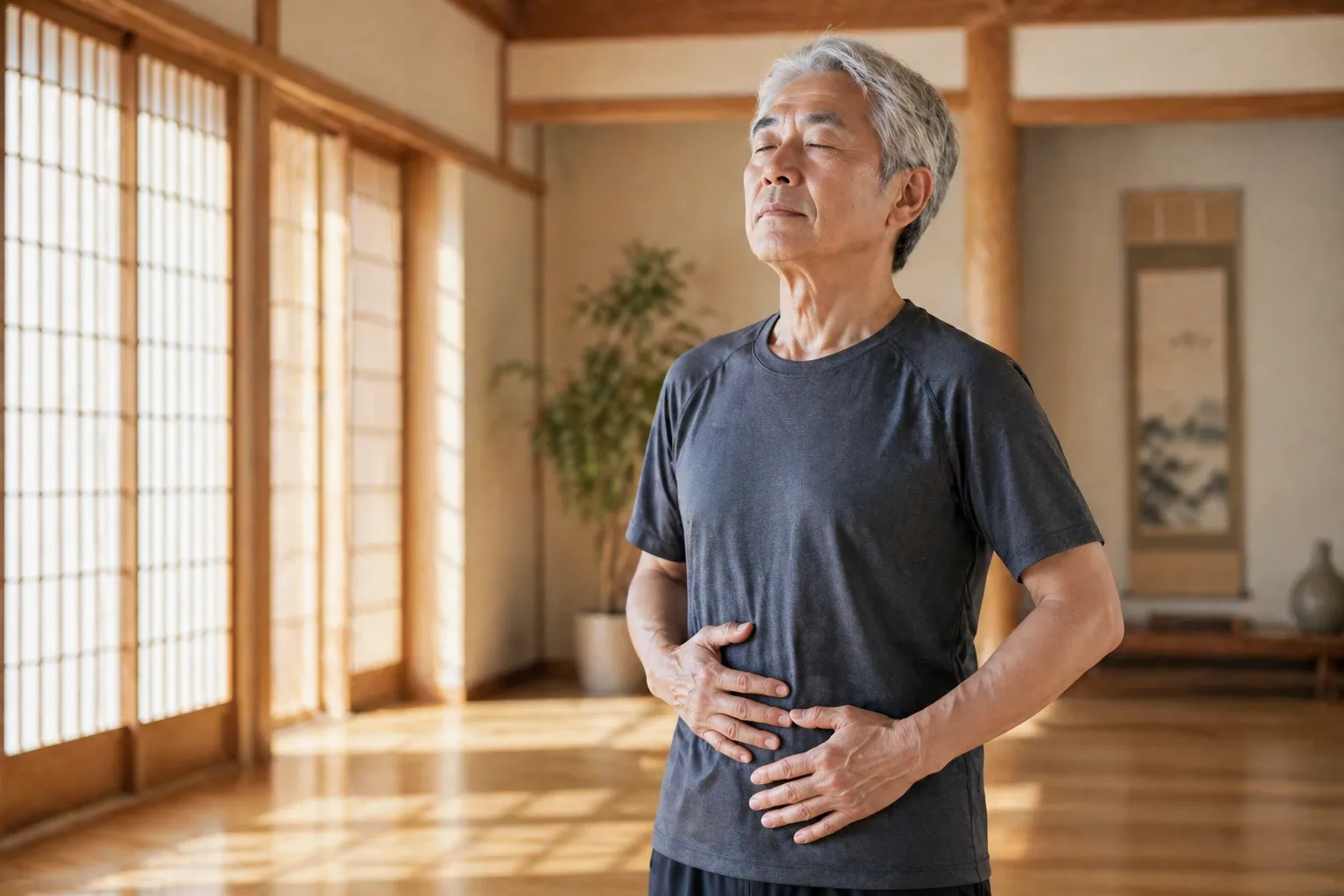
What if you could strengthen your core, improve your posture, and relieve back pain, all in just two minutes a day? The Japanese Long Breath Method, also known as the Ryosuke Breathing Technique, promises exactly that. And unlike many fitness trends that fade quickly, this simple breathing exercise has been practiced quietly in Japan for over a decade.
The method was discovered accidentally by Japanese actor Miki Ryosuke, who was practicing breathing exercises to relieve chronic back pain. What he found surprised him: not only did his back pain improve, but his core became noticeably stronger. The technique requires no equipment, can be done standing or sitting, and takes less time than brewing a cup of tea.
The Accidental Discovery
Miki Ryosuke, a 55-year-old Japanese actor, wasn't trying to create a fitness method. He was simply following his doctor's advice to do breathing exercises for severe back pain. But after practicing the technique consistently for several weeks, he noticed something remarkable: his waist had gotten smaller, his posture had improved, and his back pain had significantly decreased.
Ryosuke shared his experience, and the technique quickly spread across Japan. His approach became known as the Long Breath Diet (ロングブレスダイエット), though the real benefits go far beyond weight management. For seniors especially, the core-strengthening and posture-correcting aspects are what make this method truly valuable.
How to Do the Long Breath Method
The beauty of this technique lies in its simplicity. The basic pattern is easy to remember: inhale for 3 seconds, exhale for 7 seconds. That's the foundation of the entire method. The way you position your body and engage your muscles during these breaths is what turns simple breathing into a quiet workout for your deep core.
The Standing Version (Primary Method)
Stand with your feet hip-width apart, then place one foot slightly in front of the other so that about 90% of your weight rests on your back foot. Keep your spine straight, your shoulders relaxed, and gently squeeze your buttocks to engage your core and stabilize your pelvis.
Inhale slowly through your nose for three seconds while raising your arms above your head. Feel your chest expand and your ribcage lift. Then exhale forcefully through your mouth for seven seconds while contracting all of your muscles, especially your abdominals. Imagine you're blowing out candles on a birthday cake while pulling your belly button toward your spine.
Repeat this cycle for two to five minutes. Most beginners start with about six repetitions (roughly one minute) and build up gradually as the muscles get stronger.
The Seated Version (For Limited Mobility)
If standing is difficult or you're just getting started, the seated version works equally well for engaging your core. Sit on the edge of a sturdy chair with your feet flat on the floor and your spine tall. Place one hand on your lower belly and the other on your lower back. These hands give you valuable feedback throughout the exercise.
Inhale through your nose for three seconds, feeling your belly expand into your hand. Then exhale through your mouth for seven seconds while actively pulling your belly button inward. You'll know you're doing it correctly when you feel your abdominal muscles working firmly against your hand during the exhale.
Why the Long Breath Method Works
The effectiveness of this method comes down to what happens when you exhale forcefully while engaging your muscles. This isn't passive breathing. It's an isometric core exercise disguised as a breathing technique.
When you exhale and pull your belly inward, you activate the transverse abdominis, the deep core muscle that wraps around your midsection like a corset. This is the same muscle physical therapists target when treating chronic back pain. The slow three-second inhale also encourages full diaphragmatic breathing, which many people lose as they age due to shallow breathing habits. Proper diaphragm function is the foundation of both core stability and spinal health.
Finally, the stance and arm positions naturally encourage proper spinal alignment. Practiced daily, this gentle posture-training effect helps counteract the forward-hunching that often develops with age.
Why It's Especially Valuable for Seniors

While the Long Breath Method benefits people of all ages, it's particularly well-suited for older adults. Unlike crunches or planks, this exercise puts no pressure on your knees, wrists, or spine. You're simply breathing with intention. That makes it one of the safest ways to build genuine core strength when joints are sensitive or recovery time matters.
A strong core is essential for balance and fall prevention, and the deep transverse abdominis is exactly what keeps your trunk stable when you reach, turn, or shift your weight. The Long Breath Method strengthens these muscles without any of the risks that come with aggressive ab work. Remember, Ryosuke originally discovered this technique while treating his own back pain, and the combination of core engagement and posture correction works directly to support the lower back.
There are also two quieter benefits that matter at any age. The deep breathing pattern helps maintain (and often improves) respiratory capacity, which tends to decline gradually over the years. And the extended seven-second exhale activates the parasympathetic nervous system, the body's "rest and digest" state, lowering stress hormones and leaving you noticeably calmer after each session. For more on this calming effect, see our guide to Hara breathing.
Common Mistakes to Avoid
The most common error is holding your breath at the top of the inhale. The transition between inhaling and exhaling should be smooth. Flow directly from the three-second inhale into the seven-second exhale without pausing.
Another frequent mistake is forgetting the muscle engagement. Simply breathing deeply isn't enough. The magic happens when you actively contract your abdominal muscles during the exhale. Think of "squeezing" the air out rather than just letting it escape.
Beginners often start too intensely as well. If you feel dizzy or lightheaded, you're pushing too hard. Start with just four or five breath cycles and increase gradually over several weeks.
Finally, the practice only works if you do it consistently. Two minutes every day is far more effective than ten minutes once a week.
A Realistic Perspective on Results
Let's be honest about what this method can and can't do. The Japanese Long Breath Method is sometimes marketed as a "miracle weight loss technique," but the science doesn't fully support those claims. While some practitioners report losing inches from their waist, this is most likely due to improved posture and core muscle tone rather than significant fat loss.
What the method can reliably deliver is better posture, stronger core muscles, improved breathing habits, reduced back pain, and a daily moment of mindful movement. For seniors, these benefits are genuinely valuable, perhaps more valuable than dramatic weight-loss claims.
Think of it as one piece of a healthy lifestyle puzzle. Combined with regular walking, balanced nutrition, and other gentle exercises like Sotai movement therapy, the Long Breath Method becomes a powerful tool for maintaining health and independence as you age.
When to Be Cautious
While the Long Breath Method is generally safe, certain conditions warrant caution. If you have uncontrolled high blood pressure, consult your doctor before starting, because the muscle contraction during the exhale can temporarily raise blood pressure. People with respiratory conditions like COPD should also check with their healthcare provider before practicing.
If you experience dizziness, stop immediately and sit down. Some lightheadedness is common when you first start (your body simply isn't used to taking in this much oxygen), but it should pass within a few days of regular practice. If it persists, reduce the intensity or speak to a professional.
Your First Week: A Simple Plan
Days 1-3: Practice the seated version only. Do five breath cycles (about 50 seconds) twice per day, once in the morning and once in the evening. Focus on getting the timing right: three seconds in, seven seconds out.
Days 4-5: If you feel comfortable, try the standing version. Continue with five to six breath cycles twice daily. Pay attention to your posture and the feeling of your core engaging during the exhale.
Days 6-7: Increase to eight or ten breath cycles per session (about 90 seconds to 2 minutes). Notice how it's becoming more natural.
By the end of the first week, you'll have a solid foundation. From there, you can gradually increase to two to five minutes per session, once or twice daily.
Frequently Asked Questions
Will the Long Breath Method really help me lose weight? ▼
Probably not in a dramatic way. Reported "inches lost" usually come from improved posture and core tone rather than fat loss. The real benefits are stronger core muscles, better posture, less back pain, and calmer breathing, which are arguably more valuable than a number on the scale.
How long until I notice results? ▼
Most people feel calmer and more "centered" after their very first session. Posture improvements and core engagement become noticeable within two to three weeks of daily practice. Lasting back-pain relief usually develops over four to six weeks of consistent practice.
Can I do this if I have back pain right now? ▼
Yes. In fact, this is exactly the situation Ryosuke himself was in when he discovered the technique. Start with the seated version and a small number of cycles. If any movement increases pain rather than easing it, stop and consult your healthcare provider.
When is the best time of day to practice? ▼
Whenever you'll actually do it. Many people prefer the morning to "wake up" the core, while others use it as a calming bedtime ritual. Avoid practicing immediately after a large meal. Give yourself 30-60 minutes of digestion time first.
Do I have to do the standing version? ▼
No. The seated version engages the same deep core muscles and is perfectly effective. If standing is uncomfortable, painful, or affects your balance, stay seated. The practice still works.
Why do I feel lightheaded when I start? ▼
This is usually a sign that you're taking in more oxygen than your body is used to. Reduce the number of cycles, sit down, and breathe normally for a minute. As your body adapts over a few days, the lightheadedness almost always disappears.
Breathe Your Way to a Stronger Core
The Japanese Long Breath Method reminds us that sometimes the simplest exercises are the most sustainable. You don't need expensive equipment, a gym membership, or hours of free time. You just need two minutes, a bit of floor space, and the willingness to breathe with intention.
For seniors looking to maintain core strength, improve posture, and add a gentle daily practice to their routine, this Japanese technique offers a practical starting point. It's not a miracle cure, but it is a method that has helped millions of people in Japan feel stronger and more balanced in their bodies.
Why not try it right now? Stand up, take a slow breath in, and exhale for seven full seconds while pulling your belly inward. That's the whole practice. Your core will thank you.
Medical Disclaimer
This article is for informational purposes only and should not replace professional medical advice. If you have uncontrolled high blood pressure, respiratory conditions, or any other health concerns, consult your healthcare provider before beginning the Japanese Long Breath Method. Stop immediately if you experience persistent dizziness, chest discomfort, or pain.