Kinhin: The Japanese Walking Meditation That Transforms Every Step Into Mindfulness
Discover how this ancient Zen practice turns simple walking into profound meditation, perfect for seniors who find sitting meditation challenging.
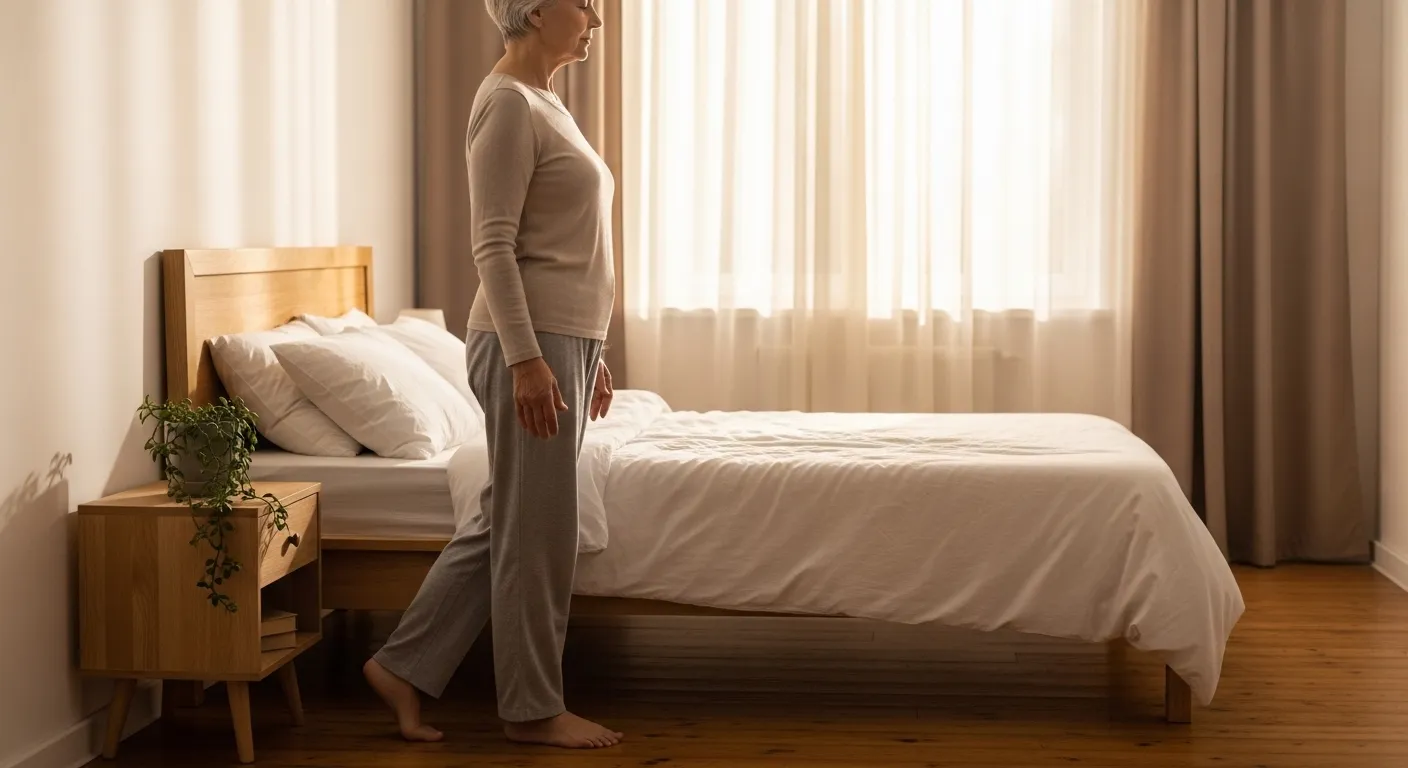
Kinhin (経行, pronounced "keen-heen") is a form of walking meditation practiced in Zen Buddhist monasteries for over a thousand years. Unlike regular walking where your mind wanders freely, kinhin is a practice of total presence. Each step becomes an object of meditation, each breath a return to the present moment.
The beauty of kinhin lies in its accessibility. You don't need to sit cross-legged on a cushion, twist into yoga poses, or even leave your living room. All you need is the ability to walk and the willingness to pay attention. This makes kinhin particularly valuable for seniors who may find seated meditation uncomfortable or who simply prefer movement to stillness.
In Zen monasteries, kinhin serves as a bridge between periods of seated meditation (zazen). Monks walk slowly and deliberately for 5-10 minutes between sitting sessions, using movement to maintain the meditative state while giving their legs a break. But kinhin isn't just a transition. It's a complete practice in itself, and one that can transform how you experience every step you take.
The Philosophy Behind Kinhin
Kinhin is rooted in several core Zen principles that make it more than just slow walking:
Every Moment is Practice
In Zen Buddhism, there's no distinction between "meditation time" and "regular life." Kinhin embodies this teaching: walking itself becomes the meditation. You're not walking to meditate. Walking is the meditation. Once you learn to walk with full awareness, every trip to the mailbox, every stroll through the grocery store, becomes an opportunity for presence.
Form and Emptiness
The precise form of kinhin (the hand position, the slow pace, the synchronized breathing) isn't arbitrary. This external structure creates internal spaciousness. By following the form exactly, your busy mind has less room to wander. Paradoxically, strict form creates freedom: when you stop deciding how to walk, you're free to simply be while walking.
Body and Mind are One
Western culture often treats body and mind as separate. Zen sees body and mind as a unified whole. In kinhin, this unity becomes experiential. Your breath, your footsteps, your awareness all merge into a single, integrated experience of walking.
Continuous Practice
Kinhin offers a middle path: it's easier to maintain awareness while moving than while sitting through a busy day, yet more structured than trying to "be mindful" during chaotic daily activities. It trains your capacity for continuous awareness in a controlled, supportive way.
How Kinhin Differs From Regular Walking
Regular Walking
- •Goal-oriented: walking to get somewhere
- •Variable pace based on urgency
- •Distracted mind: thinking about destination, tasks, worries
- •Unconscious breathing
Kinhin Walking
- •Process-oriented: the walking itself is the point
- •Controlled pace: deliberate, usually slow, always consistent
- •Present mind: attention continuously returns to the immediate experience
- •Conscious breath synchronized with steps
- •Silent practice done in silence to support inner attention
The key difference is intentionality. Regular walking happens while your mind is elsewhere. Kinhin walking is your mind's primary activity.
The Basic Kinhin Technique
Let's learn the traditional form step by step. Don't worry about perfection. The form is a tool, not a test.
Hand Position (Shashu)

The hand position in kinhin is called shashu and serves both practical and symbolic purposes:
- 1.Make a fist with your left hand, thumb tucked inside
- 2.Place this fist against your chest, at the center of your sternum
- 3.Cover your left fist with your right hand, palm to palm
- 4.Keep your elbows out slightly from your body, creating space under your arms
- 5.Your forearms should be roughly parallel to the ground
This position prevents your arms from swinging (which would distract you), keeps your chest open for easier breathing, and provides a stable, unchanging reference point for your awareness.
Body Posture
- 1.Stand tall with your spine naturally erect
- 2.Imagine a string gently pulling the crown of your head toward the sky
- 3.Keep your chin slightly tucked, neck long
- 4.Shoulders relaxed, not hunched or pulled back
- 5.Pelvis neutral, knees soft, weight distributed evenly on both feet
Your gaze should be lowered, eyes open but soft-focused, looking at the ground about 4-6 feet in front of you. Don't stare at anything in particular. Let your peripheral vision remain active.
The Basic Step Pattern
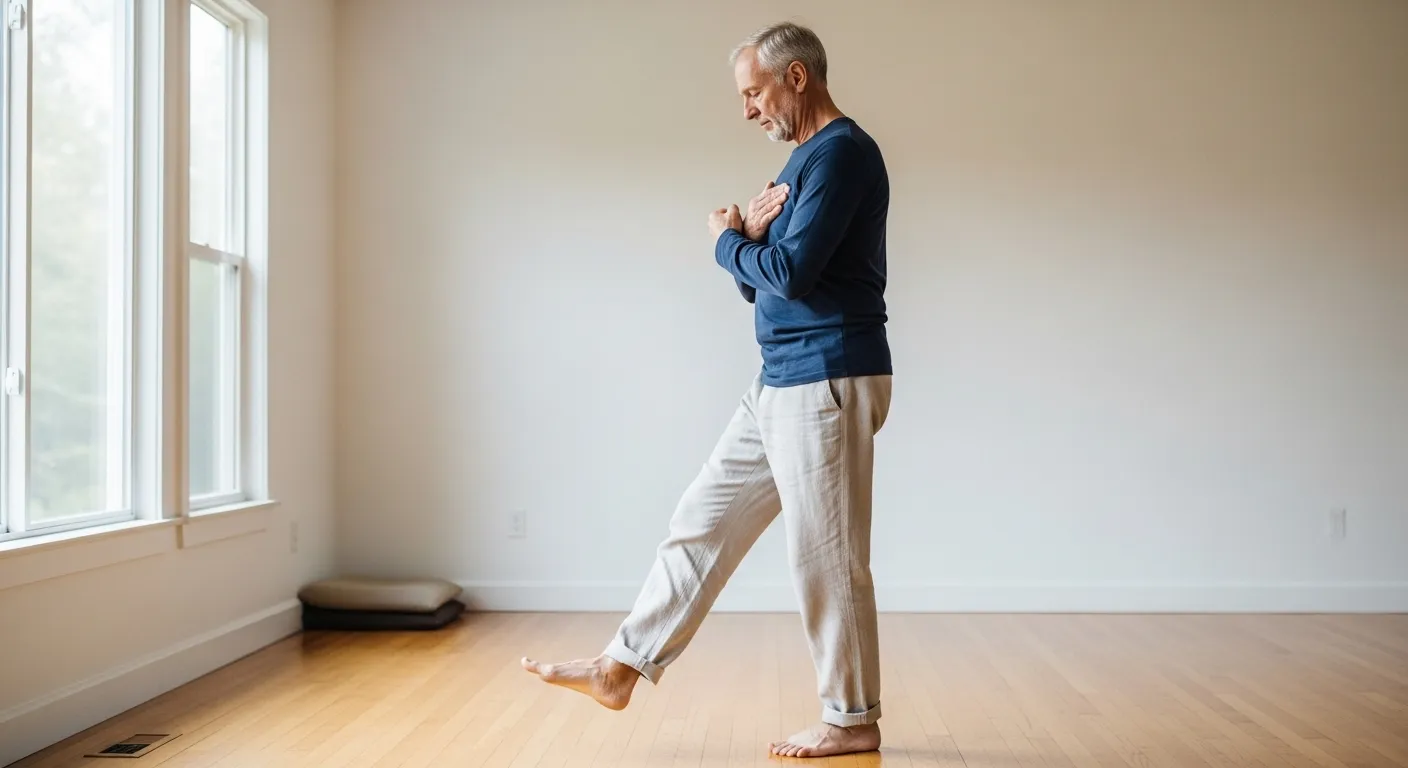
Step Timing:
- 1.Shift your weight fully to your left foot
- 2.Slowly raise your right heel, leaving the toes touching the ground
- 3.As you inhale, slowly lift and move your right foot forward (about half a foot length)
- 4.As you exhale, slowly place the foot down, heel first, then rolling through to the toes
- 5.Shift your weight to the right foot. Repeat with the left foot
Breath Coordination:
- •One complete breath (in and out) per step
- •Inhale as you lift and move the foot forward
- •Exhale as you place it down and shift weight
- •Natural breathing, don't force or control it, just synchronize
In traditional kinhin, one step might take 5-10 seconds. This glacial pace serves a purpose: it's almost impossible to maintain physical balance at this speed without complete mental presence.
Circle Pattern
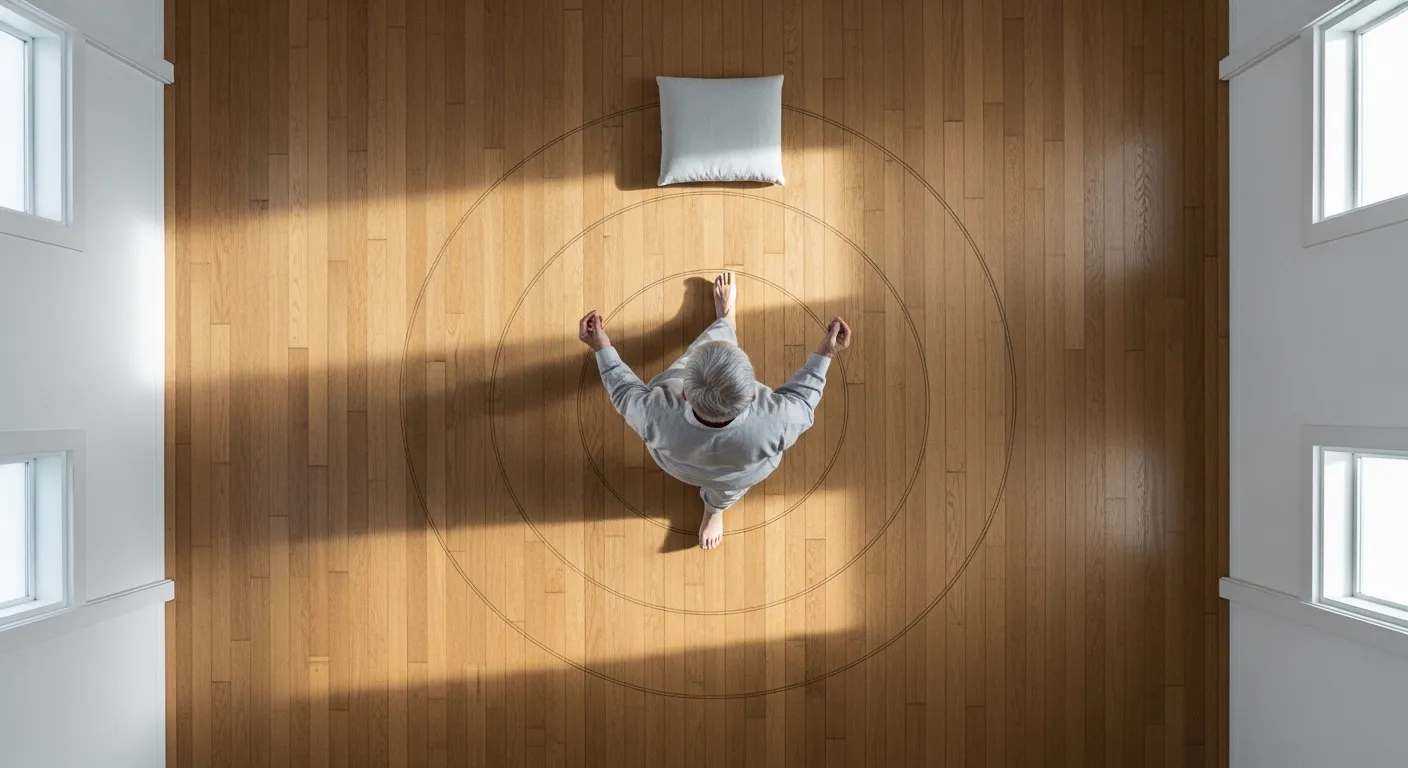
- 1.Choose a clear path (a room, hallway, or outdoor space)
- 2.Begin walking clockwise in a circle or oval
- 3.When you complete the circuit, simply continue
- 4.Practice for 5-10 minutes initially
- 5.End by standing still for a few breaths before resuming normal activity
Walking in a circle reinforces that the walking itself is the practice, not the destination.
Step-by-Step Instructions for Beginners
Your first kinhin session might feel awkward, and that's completely normal. Here's a progressive five-session guide:
Session 1: Just Walking Slowly (5 minutes)
Don't worry about perfect form yet. Set a timer, stand in shashu position, begin walking very slowly around your room. Focus simply on the sensation of your feet touching the ground.
Session 2: Add Breath Awareness (5 minutes)
Walk slowly as before. Notice your natural breathing rhythm. Gradually synchronize: inhale as you lift and move the foot, exhale as you place it down. If you lose the rhythm, just return to it.
Session 3: Refine the Form (10 minutes)
Pay attention to all elements: hand position, posture, coordinated breathing. Every few steps, mentally scan your form. When your mind wanders to thoughts, gently return attention to your feet or breath.
Session 4: Develop Continuity (10 minutes)
When you notice your mind has wandered, mentally note "thinking" and return to sensations. Try to catch yourself earlier each time. The goal isn't zero thoughts but immediate return to present awareness.
Session 5: Settle Into the Practice (15 minutes)
Set aside 15 minutes in a quiet space. Walk with full attention to form, breath, and sensations. Let the practice become almost automatic. Rest in the continuous awareness of walking, breathing, being present.
Variations of Kinhin
Slow Kinhin (Traditional Zen)
Extremely slow, one step per full breath cycle (5-10 seconds per step). Best for deep concentration practice. Maximum mindfulness, profound calm. Requires excellent balance and mental focus.
Medium Kinhin (Moderate Pace)
One step per 2-3 seconds. Best for beginners, daily practice, and seniors with balance concerns. Sustainable for longer periods and more accessible.
Fast Kinhin (Brisk Walking)
Normal to slightly brisk walking speed. Used in some Zen traditions between long sessions. Energizing with cardiovascular benefits. Challenge: maintaining full attention while moving quickly.
Outdoor Kinhin (Nature Walking)
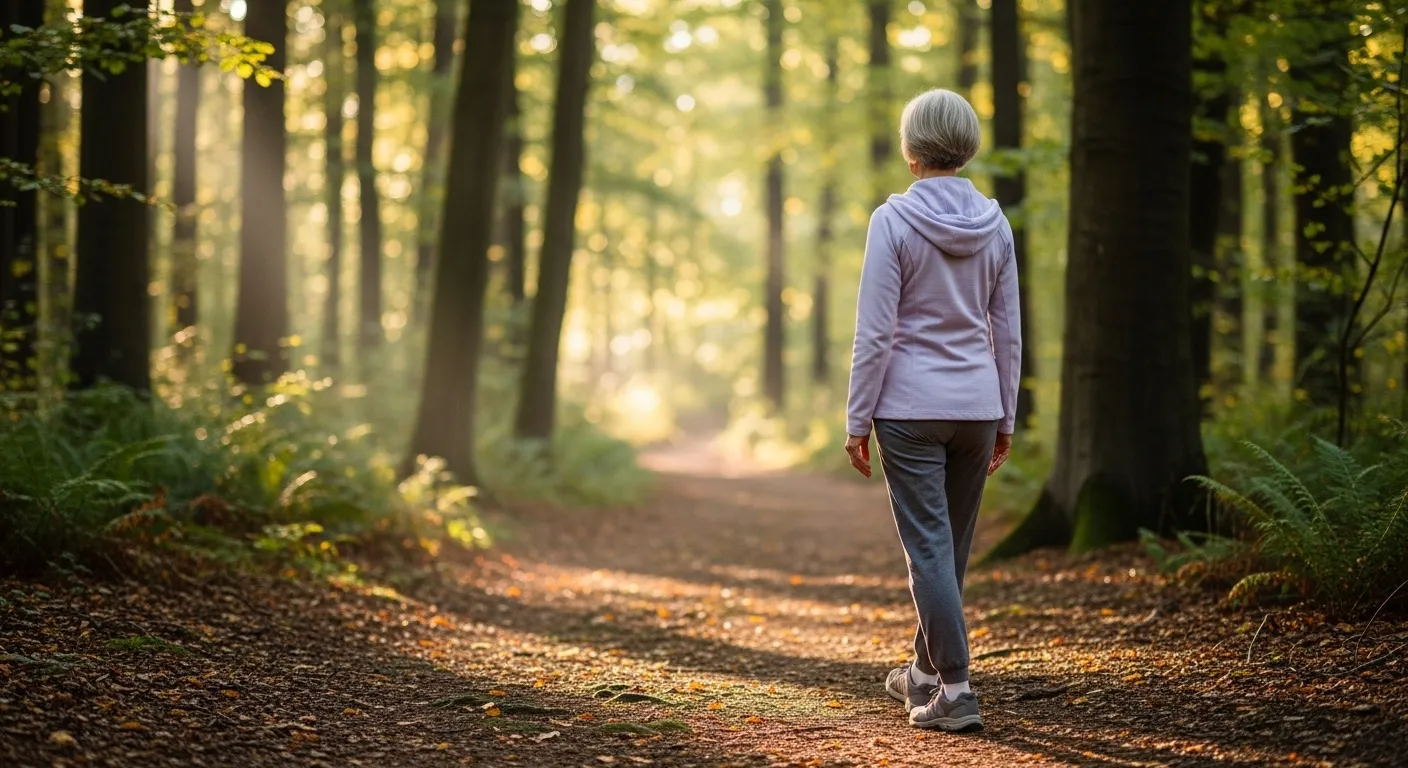
Any speed that feels natural while maintaining awareness. More sensory input which can also become objects of meditation. Benefits include fresh air, vitamin D, and varied terrain.
Choose the variation that matches your current needs. You might do slow kinhin in the morning for centering, medium during the day for stress relief, and outdoor kinhin in the afternoon for refreshment.
Breathing Techniques in Kinhin
Natural Breath Coordination (Beginner)
Simply notice your natural breathing and let steps align with it. Don't count or control the breath. One inhale/exhale cycle per step. Everything adjusts organically.
Extended Exhale Breathing (Intermediate)
Emphasizing the exhale activates the parasympathetic nervous system. Inhale through nose as you lift the foot (count 4). Exhale through nose as you place it down (count 6-8). The exhale is 50-100% longer than inhale, creating profound relaxation and mental clarity.
Hara Breathing (Advanced)
Place attention 2 inches below your navel as you breathe. Feel the hara gently expand on inhale and softly contract on exhale. Breath and awareness settle into this center, creating grounded, stable presence. Learn more about Hara breathing techniques.
Counted Breath Walking (Advanced)
Count "one" on the first exhale, "two" on the second, continue up to ten, then return to one. If you lose count, return to one. Provides an additional focus object for deeper concentration.
A Complete Daily Kinhin Practice
Morning Kinhin (10 minutes)
Purpose: Set intention for the day, cultivate morning calm.
Find a clear space. Stand in shashu position, take three deep breaths. Begin slow kinhin for 10 minutes. End by standing still for three breaths. Mentally dedicate: "May I walk through this day with awareness."
Midday Kinhin (5 minutes)
Purpose: Reset after morning activities, release accumulated stress.
Step away from work. Do medium-pace kinhin for 5 minutes. If possible, practice outdoors for additional benefits. Return to activities with renewed presence.
Evening Kinhin (10-15 minutes)
Purpose: Release the day, transition to evening calm.
Before dinner or bed, slow kinhin for 10-15 minutes. Focus on letting go with each exhale. Allow thoughts about the day to arise and pass without engagement.
Weekly Intensive (30-60 minutes)
Purpose: Deepen your practice.
Once a week, alternate kinhin with seated meditation (10 minutes sitting, 10 minutes kinhin, repeat). Or practice kinhin continuously for 30-60 minutes. Explore different variations during the session.
Kinhin for Specific Benefits
For Anxiety and Stress Relief
Medium to slow pace with extended exhale breathing (exhale twice as long as inhale). Focus on the soles of your feet. Practice 15-20 minutes or until calm returns.
Why it works: Slow walking plus extended exhale activates the parasympathetic nervous system. Focusing on feet grounds you in physical reality, interrupting anxious thought loops.
For Depression and Low Energy
Medium to fast pace with equal inhale/exhale breathing. Eyes slightly more upward. Practice outdoors if possible.
Why it works: Faster walking increases circulation and energy. Outdoor practice adds natural light. The rhythm of movement lifts mood.
For Balance and Fall Prevention
Very slow pace (challenges balance most). Practice near a wall initially. Focus intensely on weight shifting sensations. Gradually reduce support.
Why it works: Slow kinhin is perhaps the best balance exercise available. Moving this slowly is impossible without perfect attention to weight distribution, training both physical balance and proprioception.
For Insomnia and Sleep Problems
Very slow pace with deep, slow breathing. Practice 30-60 minutes before bed. Focus on releasing tension with each step. End with 5 minutes of standing meditation.
Why it works: Slow kinhin signals your nervous system to wind down, creating a buffer between active day and sleep.
For Cognitive Health and Memory
Vary the pace: 2 minutes slow, 2 minutes medium, 2 minutes slow. Count breaths up to ten. Practice in different locations.
Why it works: Varying demands engages more brain regions. The combination of movement, breath control, and counting exercises multiple cognitive functions simultaneously.
Integrating Kinhin Into Daily Life
The real power of kinhin emerges when it begins to influence how you walk through daily life:
Everyday Mindful Walking
- •Walking to the car: Rather than thinking about your destination, feel your feet, notice your surroundings. Arrive fully present.
- •Grocery shopping: Walk the aisles with awareness. Feel the cart in your hands. Shopping becomes meditation in motion.
- •Walking the dog: Let your dog stop and sniff as needed. Use the pauses as moments of presence. Both you and your dog benefit from slowing down.
Transition Moments
- •Between tasks: Even 30 seconds of conscious walking clears your mind. Arrive at the new task fresh.
- •After difficult conversations: Take 5 minutes to walk mindfully. Return to equilibrium.
- •Before important events: Walk kinhin for 10 minutes. Arrive centered and present.
Nature Kinhin Practice
Find a quiet natural setting. Begin with 10 minutes of traditional kinhin. Transition to natural-pace mindful walking. Notice nature sounds, smells, sights. Pause periodically for standing meditation. Conclude with 5 minutes of slow kinhin. This combines benefits of nature exposure with mindfulness training. See also: Shinrin-Yoku Forest Bathing.
The Science Behind Walking Meditation
While kinhin comes from spiritual tradition, modern science confirms its benefits:
Neurological Effects
Research shows meditation increases alpha waves (relaxed alertness) and theta waves (deep relaxation). Walking meditation produces similar effects while also activating motor cortex regions, creating a unique brain state combining movement and meditative awareness.
Regular meditation practice literally changes brain structure, increasing gray matter in areas associated with attention, emotional regulation, and self-awareness. Walking meditation offers these benefits while being more accessible than seated practice.
Cardiovascular Benefits
Slow walking meditation can reduce blood pressure through stress reduction and direct effects on the autonomic nervous system. Even slow walking maintains circulation better than sitting. For seniors or anyone with circulation issues, walking meditation provides meditation benefits without circulatory stagnation.
Balance and Proprioception
Slow walking challenges your balance system more than normal walking, strengthening the vestibular system (inner ear balance mechanism) and reducing fall risk. Kinhin's focus on foot placement and weight distribution directly trains proprioception, your sense of where your body is in space.
Mental Health Benefits
Multiple studies confirm meditation reduces anxiety. Walking meditation may be particularly effective because movement itself reduces anxiety, the rhythm provides a natural focus object, and it's easier to maintain for people who find sitting meditation challenging. For depression, the requirement to stay present interrupts rumination, the repetitive negative thinking that perpetuates depression.
Common Challenges and Solutions
"My mind won't stop wandering"
Completely normal and expected. Your mind wandering isn't a failure. It's an opportunity. Each time you notice and return attention to walking, you strengthen your awareness. Tip: Count steps or breaths to give your mind something to do.
"I get bored"
Boredom is resistance to the present moment. Any moment, fully experienced, is endlessly rich. Tip: Make sessions shorter but more intense. Five minutes of truly engaged kinhin beats thirty minutes of bored walking.
"I lose my balance at slow speeds"
Start with medium-pace kinhin. Use a wall or furniture for support initially. This is actually one of kinhin's greatest benefits for seniors. Tip: Practice near a wall, fingers lightly touching it. Each week, try a few steps without touching.
"My knees/hips hurt during slow walking"
Very slow walking uses muscles differently. Start with medium or slightly fast kinhin. The meditative element is more important than the speed. Tip: Keep knees soft and slightly bent. If pain persists, consult a physical therapist.
"I don't have time"
Even 3 minutes provides benefit. Tip: Link kinhin to existing habits. Every morning after brushing teeth, walk kinhin for 3 minutes. Habit stacking makes it automatic.
"My arms get tired in the hand position"
This suggests shoulder tension. The position should feel effortless. Tip: Before kinhin, do shoulder rolls and arm circles to release tension. During practice, periodically relax shoulders downward.
Combining Kinhin With Other Practices
Kinhin + Seated Meditation
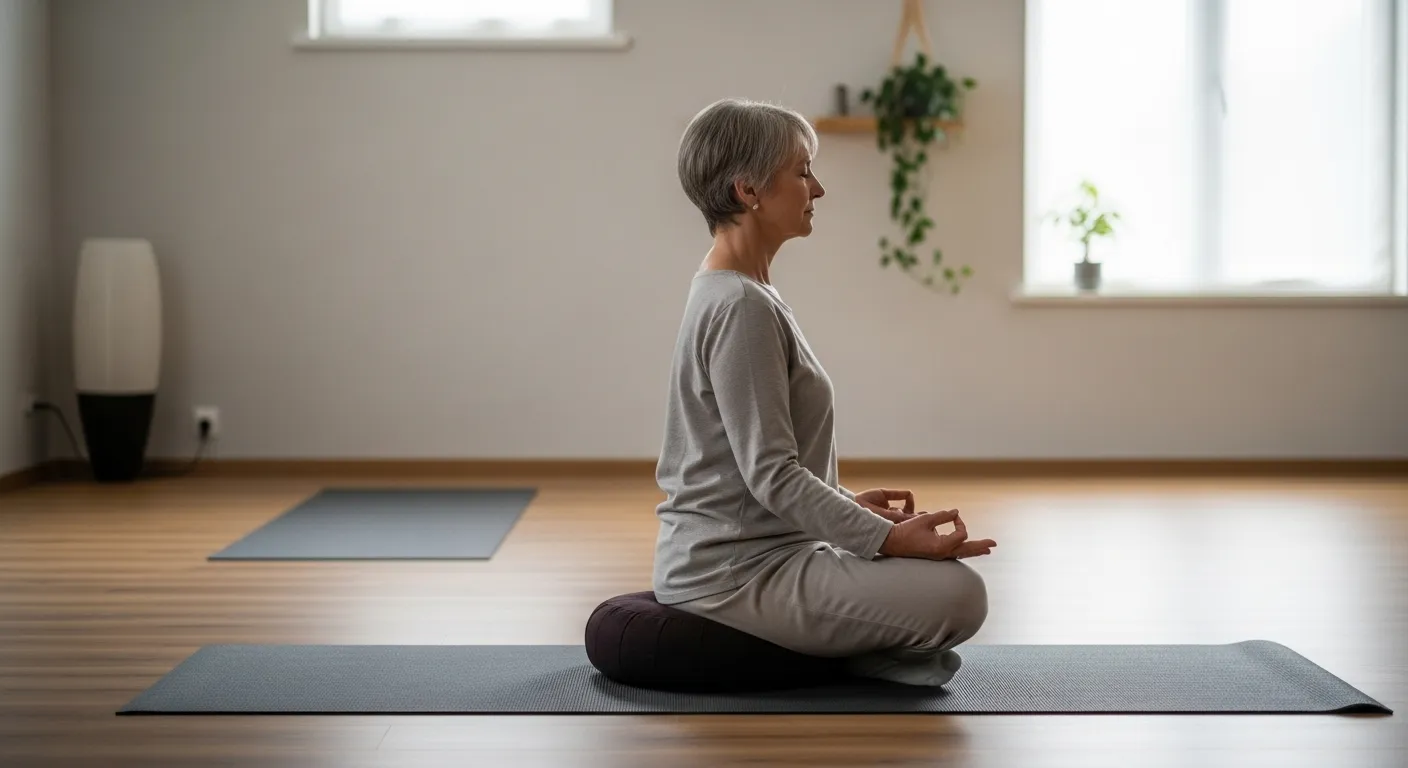
Sit zazen for 20-30 minutes. Stand and practice kinhin for 10 minutes. Return to seated meditation. Maintains alertness and addresses physical discomfort from prolonged sitting.
Kinhin + Shinrin-Yoku (Forest Bathing)
Enter forest with 10 minutes slow kinhin. Transition to natural-pace walking. Pause for standing meditation. End with 10 minutes kinhin. Both emphasize sensory awareness and present-moment attention.
Kinhin + Do-In (Self-Massage)
Morning Do-In self-massage for 10 minutes, immediately followed by 10 minutes kinhin. Do-In addresses physical stagnation, kinhin addresses mental stagnation, both cultivate body awareness.
Kinhin + Seiza Sitting
Practice kinhin between periods of seiza for a complete Zen-style session. The walking gives your legs a break while maintaining meditative awareness.
Frequently Asked Questions
Is kinhin safe for seniors with balance problems? ▼
Yes. Start with medium pace near a wall or furniture for support. Slow kinhin actually improves balance over time, making it one of the best fall-prevention exercises available. Gradually reduce support as your balance improves.
How long should I practice each day? ▼
Start with 5 minutes and build gradually. Even 3 minutes provides real benefit. For ongoing practice, 10-15 minutes daily is excellent. Quality of attention matters far more than duration.
Do I need to be Buddhist to practice kinhin? ▼
Not at all. Kinhin's benefits (stress reduction, improved balance, better focus, reduced anxiety) are available to everyone regardless of spiritual background. Many people practice it purely as a wellness exercise.
Can I use a walker or cane during kinhin? ▼
Absolutely. Use whatever support you need. The meditative quality comes from your attention, not from a specific hand position. Adapt the form to your body's needs. The mindfulness is what matters.
How is kinhin different from just walking slowly? ▼
The key difference is intentionality. In kinhin, walking is your mind's primary activity. You synchronize breath with steps, maintain specific posture and hand position, and continuously return attention to the present moment. Slow walking without this deliberate awareness is just slow walking.
When will I start seeing benefits? ▼
Most people feel calmer after their very first session. Within a few weeks of daily practice, you'll notice improved focus and reduced stress. Balance improvements typically appear within 4-6 weeks. Deeper meditative benefits develop over months and years of consistent practice.
Why Kinhin Is Perfect for Seniors Over 50
No Sitting Required
Perfect if seated meditation is uncomfortable for knees or hips.
Improves Balance
Slow walking is one of the best fall-prevention exercises.
Zero Equipment
Practice anywhere: bedroom, hallway, garden, park.
Gentle Exercise
Low-impact movement that maintains circulation and mobility.
Reduces Anxiety
Calms the nervous system through breath and movement synchronization.
Sharpens Focus
Trains attention and cognitive function through mindful movement.
One Step at a Time
In our hurried world, kinhin offers something radical: permission to slow down, to be fully present, to make each step count. You don't need to walk far. Even ten steps with full awareness is complete in itself.
The practice is simple but not easy. Your mind will wander, you'll forget the form, you'll wonder if you're doing it right. This is all part of the practice. Each time you notice you've wandered and gently return attention to walking, you strengthen your capacity for awareness.
Over time, something shifts. Walking becomes meditation. Meditation becomes life. Each step, each breath, becomes an opportunity for presence. The practice moves from the meditation hall into the world. Grocery shopping, walking the dog, crossing the parking lot all become practice.
Start small. Try five minutes tomorrow morning. Walk the length of your living room and back. Feel your feet on the floor. Notice your breath. When your mind drifts, gently return to walking. That's kinhin. The path of a thousand miles begins with a single step. Make that step a conscious one.
Medical Disclaimer
This article is for informational purposes only and should not replace professional medical advice. If you have balance disorders, neurological conditions, or other health concerns, consult your healthcare provider before beginning kinhin practice. Always practice near support if balance is a concern, and stop if you experience dizziness or pain.