Fukutsuji Method vs Yoga: Which Is Better for Seniors with Back Pain?
Two gentle paths to a stronger back and better posture. One uses a rolled towel and five quiet minutes. The other uses a chair and a few mindful poses. Here's how they really compare.
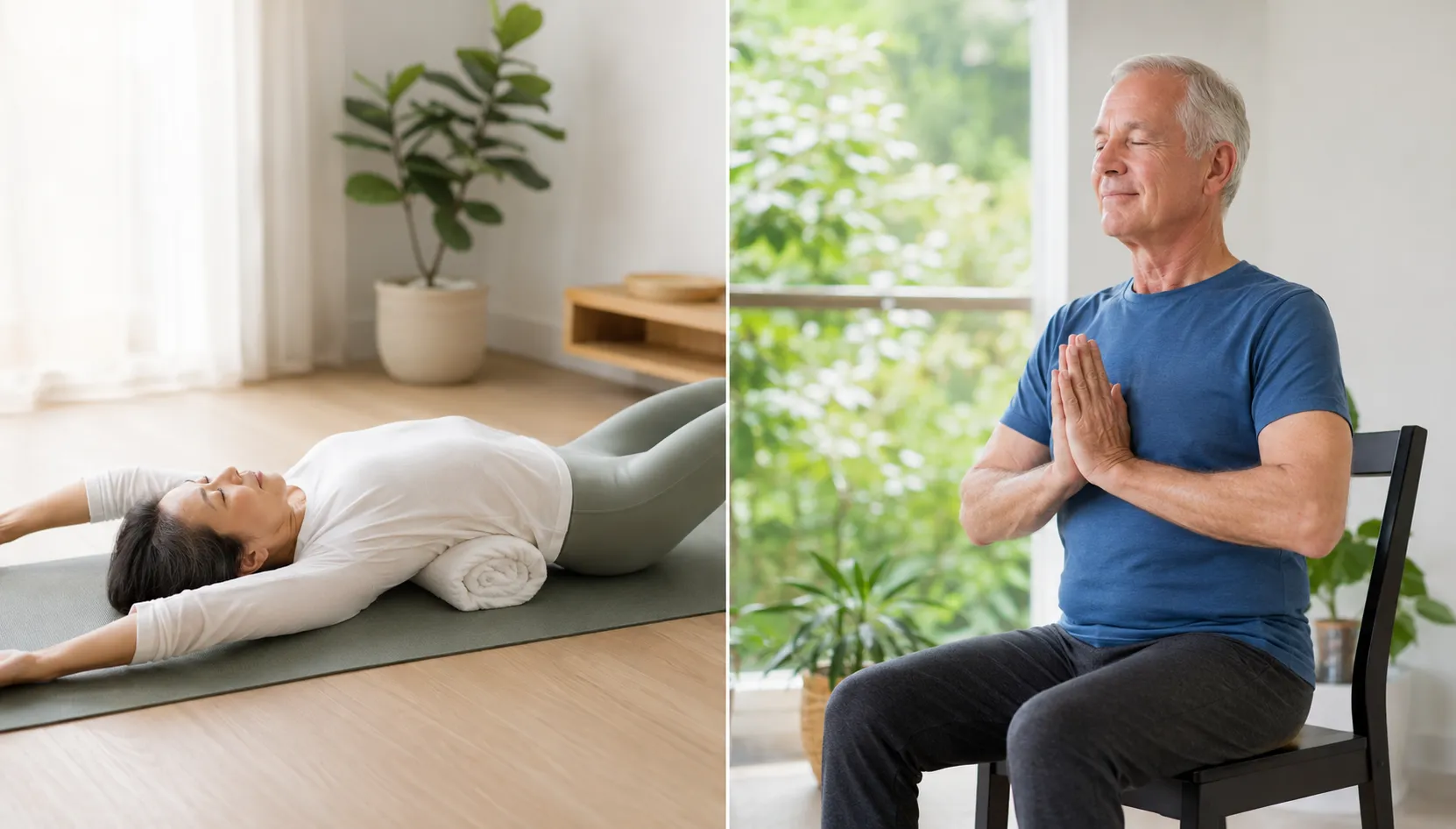
If you've ever stood in front of the mirror, noticed a slight forward hunch, and wondered "is it too late to fix this?", the short answer is no. There are two well-loved, low-impact practices that consistently help older adults improve posture and ease back pain: the Japanese Fukutsuji towel method and gentle yoga (usually practiced on a chair or with props).
Both work. Both are safe for most seniors. But they feel almost nothing alike, and the question of which one suits you usually comes down to your body, your time, and your personality. This guide walks through what each practice actually offers, where they overlap, where they differ, and how to choose the one that's most likely to become a daily habit, because the best back-care routine in the world is the one you'll actually do.
The Case for the Fukutsuji Method
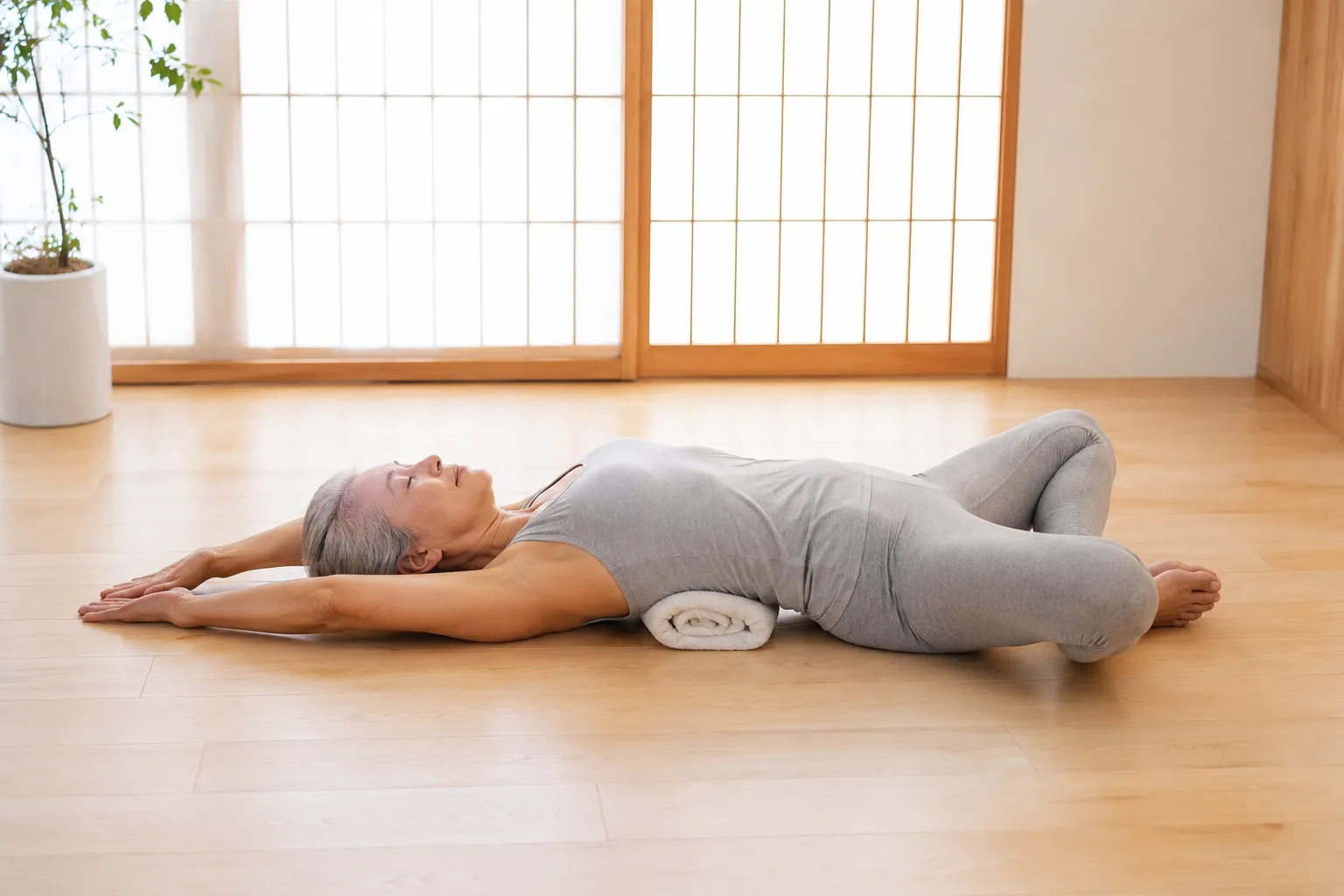
The Fukutsuji method is built around a single, deceptively simple idea: roll a bath towel into a tight cylinder, lie on the floor, place it under your lower back, and stay there for five minutes. That's the entire practice. There are no sequences to remember, no balance to maintain, and no need to follow along with a teacher or video. You just lie still and let gravity do the work of decompressing your spine and gently coaxing your pelvis back into a more neutral position.
Developed by Dr. Toshiki Fukutsuji, a Japanese bodywork specialist (reflexology, shiatsu, and acupressure) with decades of experience, the technique became wildly popular in Japan because it asks almost nothing of the practitioner. There's no warm-up, no sweat, and no risk of pulling something by reaching too far. For people in their sixties, seventies, and beyond, especially those with stiff joints or limited mobility, that low barrier to entry is a huge part of the appeal.
The downside is that the Fukutsuji method is almost entirely passive. You won't build noticeable strength from it, and it doesn't improve balance or cardiovascular fitness. What it does, it does well: it relieves accumulated tension and quietly improves posture over weeks of consistent practice. For more on the technique itself, see our full guide to the Japanese towel stretch for back pain. If rounded shoulders are your main concern, the Japanese towel exercise for posture targets the upper back specifically.
The Case for Gentle Yoga

Yoga takes a very different approach. Rather than holding one position, you move through a small sequence of poses (gentle twists, forward folds, side bends, and supported backbends), each held for several breaths. Modern chair yoga and other senior-friendly styles adapt these poses so you never have to get down on the floor, balance on one leg, or reach beyond what your body comfortably allows.
The big advantage of yoga over a passive stretch is that it works the body in multiple dimensions. A short fifteen-minute chair sequence can improve spinal mobility, strengthen the small stabilizing muscles around the hips and shoulders, increase flexibility, and challenge your balance, all in one session. Yoga also tends to engage your attention more fully, which makes it a stronger candidate as a daily ritual for people who get bored lying still.
The trade-off is that yoga asks more of you. You need to learn the poses, follow a sequence, and pay attention to alignment so you don't strain anything. For someone in pain, recovering from an injury, or simply looking for the lowest-effort possible practice, that extra mental and physical load can be a barrier rather than a benefit.
Where the Two Practices Really Differ
The clearest difference is effort. The Fukutsuji method is one of the most effort-free practices in the entire wellness world. You lie down and breathe. Even the gentlest yoga sequence requires more focus, more movement, and a willingness to follow instructions. Neither approach is "better". They simply meet you at different energy levels.
The second difference is what you actually train. The towel method primarily releases tension and helps the spine settle into better alignment. Yoga does that too, but also builds modest strength in the core, hips, and shoulders, improves balance, and gradually increases flexibility. If you want a single tool to address back pain only, the towel wins on simplicity. If you want a broader fitness foundation, yoga gives more.
Time commitment also matters. Fukutsuji is a strict five-minute practice: no more, no less. A useful chair-yoga session usually runs ten to twenty minutes. For someone with a packed day, five non-negotiable minutes can be much easier to schedule than fifteen. For someone with quiet mornings, the longer practice might feel like a welcome ritual.
Finally, there's the learning curve. With the Fukutsuji method, you read the instructions once, you roll the towel, and you're ready. Yoga, even the gentlest form, takes a few weeks of practice (and ideally some guidance from a video or instructor) before the poses start to feel natural.
Which Practice Suits Which Body?
The Fukutsuji method tends to be the better starting point if you're currently in back pain, if you have very limited mobility, if you've never exercised regularly, or if you simply want the absolute lowest-effort option that still makes a difference. It's also ideal if your main complaint is a specific feeling of lower-back compression or a forward-tilted pelvis.
Gentle yoga is usually the stronger choice if you're already reasonably active, if balance or general stiffness is a bigger concern than pain, or if you enjoy a sense of routine and ritual in your movement practice. It also tends to suit people who get restless lying still and want their daily practice to feel like "doing something."
None of these rules are absolute. Many seniors find that one practice fits them clearly for a season, and then the other becomes more attractive as their body or schedule changes. The point isn't to pick a permanent winner. It's to choose the one that fits your life right now.
Why You Don't Really Have to Choose
Here's the truth most comparison articles skip: these two practices are not in competition. They actually complement each other beautifully, and a surprising number of people end up using both, often in the same week, sometimes in the same day.
A common combination is to use the Fukutsuji method in the evening as a five-minute "spinal reset" before bed, while doing a short chair-yoga sequence in the morning to wake up the body and improve circulation. The towel relieves the day's accumulated tension. The yoga builds the strength and mobility that prevents tomorrow's tension from settling in. Together they cover both ends of the back-care equation: the passive recovery and the active maintenance.
Common Mistakes With Both Practices
With the Fukutsuji method, the most frequent mistake is staying too long. Five minutes is the recommended duration for a reason. Beyond that, the position can start to overextend the lower back. More is not better here.
With yoga, the most common mistake is pushing into a pose rather than respecting where your body comfortably stops. A senior-friendly twist or fold should feel like a mild, pleasant stretch, never a sharp pull. If a pose hurts, you've gone too far. Come back a little and breathe.
And for both practices, the biggest mistake of all is stopping too early. Neither method delivers dramatic results in the first session. Real change usually takes two to four weeks of near-daily practice. Give it time before deciding it isn't working.
A Realistic Perspective on Results
Both practices are sometimes oversold online. You'll see headlines promising the Fukutsuji method "shrinks your waist in five minutes" or that gentle yoga "reverses aging." Neither claim holds up to scrutiny. What does hold up is the more modest, genuinely valuable benefit: with daily practice over several weeks, both methods reliably reduce mild back pain, improve perceived posture, and create a small but real sense of physical wellbeing.
For chronic or severe back pain, neither practice replaces professional medical care. They work best as part of a wider approach that includes regular walking, sensible nutrition, and a working relationship with a doctor or physical therapist who knows your history.
When to Be Cautious
If you've had recent spinal surgery, a diagnosed disc problem, severe osteoporosis, or any acute injury, talk to your doctor before starting either practice. The Fukutsuji method in particular places gentle but real pressure on the lumbar spine, which isn't appropriate for every condition.
For yoga, look for classes or videos explicitly labeled "senior," "gentle," "chair," or "restorative." Avoid anything described as "power," "hot," or "vinyasa". Those styles assume a much younger and more athletic body. And as with any new practice, stop immediately if something hurts and check in with your doctor before continuing.
Frequently Asked Questions
If I can only do one, which should I start with? ▼
Start with the Fukutsuji method. It has the lowest barrier to entry: no learning curve, no equipment beyond a towel, and only five minutes a day. Once it becomes habit, you can add a short chair-yoga session if you want more variety and strength benefits.
Can I do both on the same day? ▼
Yes, and many people find this combination especially effective. A common pattern is chair yoga in the morning to wake the body up, and the Fukutsuji method in the evening to release the day's tension. Just make sure you're not exhausted. Two short, gentle practices should leave you feeling better, not depleted.
Which one is safer for someone with osteoporosis? ▼
Neither is automatically safe. Both require medical clearance if osteoporosis is significant. Forward-folding yoga poses can be risky, and the Fukutsuji method puts pressure on the lumbar spine. A doctor or physical therapist can advise which modifications are appropriate for your specific bone-density situation.
How long until I notice a difference? ▼
Most people report a pleasant, settled feeling after the very first Fukutsuji session and the first gentle yoga class. Genuine posture improvement and consistent pain relief typically take two to four weeks of near-daily practice. Stay patient. Both methods reward consistency far more than intensity.
Do I need any equipment for yoga? ▼
For chair yoga, all you really need is a sturdy chair without wheels. Some people add a soft cushion for the seat and a yoga strap (or a long towel) to extend their reach in seated stretches. A mat is helpful if you ever practice standing poses near the chair for balance support.
Can either replace physical therapy? ▼
No. Both are excellent supplements to professional care, but neither replaces a tailored physical therapy program, especially after an injury, surgery, or a specific diagnosis. Think of these practices as ongoing maintenance for an already-stable back, not as a substitute for individualized clinical treatment.
Choose the One You'll Actually Do
If you're still on the fence, here's the most useful piece of advice: pick whichever practice you can imagine doing tomorrow morning. A daily five-minute towel stretch will help your back far more than a fifteen-minute yoga sequence you never get around to. And a short chair-yoga session you genuinely enjoy will outperform a Fukutsuji habit that feels boring after a week.
Both practices are gentle. Both are safe for most older adults. Both reward consistency more than intensity. The only wrong choice is the one that stays on a to-do list. Roll out the towel, pull up the chair, and start.
Medical Disclaimer
This article is for informational purposes only and is not a substitute for professional medical advice. If you have recent spinal surgery, disc problems, severe osteoporosis, or any acute injury, consult your healthcare provider before beginning either the Fukutsuji method or a yoga practice. Stop immediately if you experience sharp pain, dizziness, or any symptom that feels unusual.